NEW YORK, NY – by Markos Papadatos
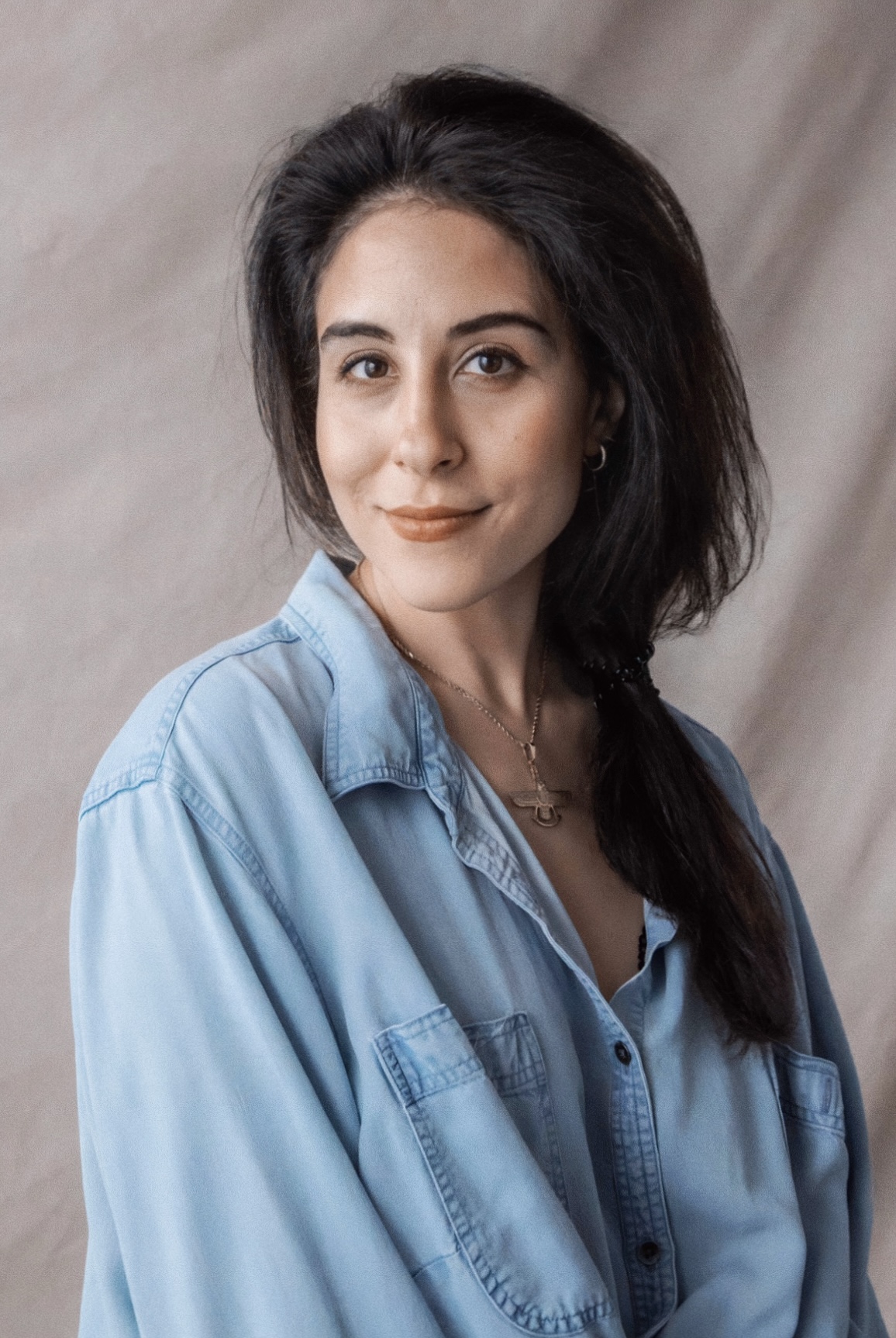
[Photo Credit: Chanel Gibbons]
Sophia Setareh Kiapos, Greek-Iranian-American director, producer, and screenwriter, chatted with Markos Papadatos about her Greek heritage and new movie “Royally Screwed,” which steams on Passionflix.
Kiapos directed from a script by Emma Chase, Joany Kane, and Tosca Musk (the CEO and co-founder of Passionflix). It stars Jenny Boyd, Max Rinehart, and Oscar nominee Shohreh Aghdashloo.
How was your experience directing ‘Royally Screwed’?
Directing Royally Screwed was a whirlwind and a gift. Fifteen years ago, I was a drama student in London – and fifteen years later, I was back in the UK directing my first feature.
I even got to work with friends from that chapter of my life, some of whom I hadn’t seen since school. One of the most full-circle moments was that Robert Price, who plays Olivia’s father, was actually one of my teachers at LAMDA.
What was it like working with crew?
We had a beautifully cohesive crew. We were so lucky. And because we only had 17 days to shoot the entire film including big, logistically demanding scenes like the ballroom and the casino party – everyone just committed full-throttle.
Our north star was always the same: be kind, be cool, make it honest, and make it beautiful.
In a perfect world, you have a long runway to prep and choreograph every setup with your DP. But Adam Feuerman (DP) and I came onto the project less than six weeks before production, so we had to be agile.
We did our shot lists and storyboards, but when we got to the UK, we realized we’d need to reinvent our plan because time simply wouldn’t allow the original ambitions.
Many days were eight scenes a day, so Adam and I would meet before crew call each morning and build the day’s shot plan in real time.
Some of my favorite moments came from that pressure. One example is the reflection shot when Nicholas picks Olivia up for their first date – it became a visual motif and eventually bookends the film with another reflection at the end, this time in candlelight.
The experience changed me. It showed me what I’m capable of under real constraints – and how much beauty can come from trust and momentum.
What was it like working with Max, Jenny, and Shohreh?
The stars aligned. It was genuinely a pleasure. They’re seasoned professionals, and Shohreh – especially – brings such depth and authority from her immense body of work.
Since our schedule was tight, we had very little time for rehearsals, and often only two takes per setup. We block-shot a lot: the actors would come in, we’d talk through the scene while we blocked it, the crew would watch, and then we’d roll.
That kind of pace only works when there’s trust. And we had it – between the cast, the crew, and the leadership. Everyone showed up with a willing attitude, and we truly built a sense of family on set. That’s one of the things I’ll always be proud of.
What did this screenplay teach you about yourself?
It reminded me that a screenplay is both a blueprint and an invitation. You have to trust the script to guide you – but you also have to leave room for intuition, discovery, and those cinematic moments you can’t plan.
The script was beautifully written and grounded in Emma Chase’s wonderful book, and I’m grateful that Tosca was open to intuitive ideas that deepened character arcs.
For instance, I wanted Queen Lenora to watch the abdication speech on her iPad at the end – giving her a private, emotional arc beat. That wasn’t on the page, but the story made space for it.
Another unplanned moment was Marty blowing out the candle at the end.
Instinctively, he became a kind of fairy godmother archetype in our Cinderella story. The candles weren’t in the script either – but cinema has a way of telling you what it wants, if you’re listening.
So, what I learned about myself is that I can lead with structure and still stay open. I can trust the plan – and trust my instincts when the art asks for something more.
How does it feel to be a filmmaker in the digital age?
It’s exciting – and it’s also daunting, because the ground keeps moving. Streaming, technology, and social media have changed not just how films are distributed, but how audiences discover them and talk about them.
The upside is that access is broader than ever: stories can travel farther, faster. The challenge is that noise is constant, attention is fragmented, and the pressure to “perform” online can sometimes compete with the quiet required to make meaningful work.
For me, the answer is to evolve without losing your center. Use the tools, don’t let the tools use you. I’m excited by what technology can unlock, especially for independent filmmaking — but I also believe deeply that creativity is irreplaceable.
AI is part of the future — I hope it remains a tool in service of artists, not the voice leading the work. Storytelling and art need the human soul. Always.
Can you tell us about your Greek heritage?
I’m equally proud of my Greek heritage as I am of my Iranian heritage. I think my love of storytelling — writing, poetry, myth, and emotion — comes from both lineages. I grew up more closely connected to my Iranian side because my mother spoke the language at home, but I’ve always felt reverence for my Greek roots. I’m proud to be Greek.
In January, I expanded my base from Los Angeles to Athens, and being surrounded by your ancestral culture is something I can’t fully describe — it’s grounding. It feels like a constant hug from my Yiayia and Papou (though they’re no longer here).
It’s an exhale. I’m actively learning Greek, and I’ve been incredibly moved by the warmth and openness I’ve experienced here as I continue to deepen that connection.
What is your advice for young and emerging filmmakers?
Be yourself — and protect that self. Your voice is the only thing no one else can replicate.
Read constantly: novels, poetry, philosophy (I sound like my Papou when I say that), and especially scripts from films you love. Watch films with intention — old films as much as new ones — and ask yourself why something moved you. Was it the framing? The light? The restraint? The performance? Train your eye and your emotional compass.
And then make work. Opportunities can feel scarce, but I’ve found the biggest breakthroughs happen when you stop overthinking and start creating. In my early twenties I bought a cheap camera and learned everything — how to build it, shoot, edit – skills that still inform my process today.
Keep creating. Don’t compare yourself to others. Consistency and authenticity will carry you farther than perfection ever will.
What are your thoughts on the Greek community on a global scale? Is it as strong as ever?
I think the Greek community globally is powerful — deeply proud, deeply connected, and incredibly supportive when people show up for one another. There’s a sense of shared identity that travels across generations and continents: food, language, faith, tradition, and a kind of “we take care of our own” spirit.
At the same time, like any community, there’s always room to grow – especially around inclusion and making space for new voices, new Greeks, and new hybrids of identity.
The future strength of any diaspora is in how open it stays: holding onto tradition while welcoming evolution.
What does the word success mean to you?
Success means alignment. It means I’m living in integrity with who I am, and making work that feels true.
Of course, I want films to reach audiences and to be financially sustainable – that matters.
At a soul level, success is waking up and feeling like I’m building a life I actually believe in: creatively, personally, spiritually. It’s having the courage to take risks, to keep my heart open, and to keep making the work even when it’s hard.
And honestly? Success is also community. The people you build with. The way you treat your collaborators. The family you create on set. If I’m doing meaningful work with good people, and growing as an artist and human, that’s success.
What would you like to tell our readers about ‘Royally Screwed’? What’s the one thing you want them to get out of it?
I want audiences to leave feeling lighter, and a little more open-hearted.
Royally Screwed is romantic, witty, and escapist in the best way, but underneath it’s also about choosing love over fear, and letting yourself be seen.
It’s a Cinderella story with warmth and humor, but it’s also about identity: who you are when no one’s watching, and who you become when you finally stop performing and start telling the truth.
If people watch it and feel joy — if it gives them a genuine exhale, a laugh, a swoon, and a reminder that love can still be tender and hopeful – then we did our job.
For more information on filmmaker Sophia Kiapos, follow her on Instagram and visit her official website.
Photo Credit: Chanel Gibbons