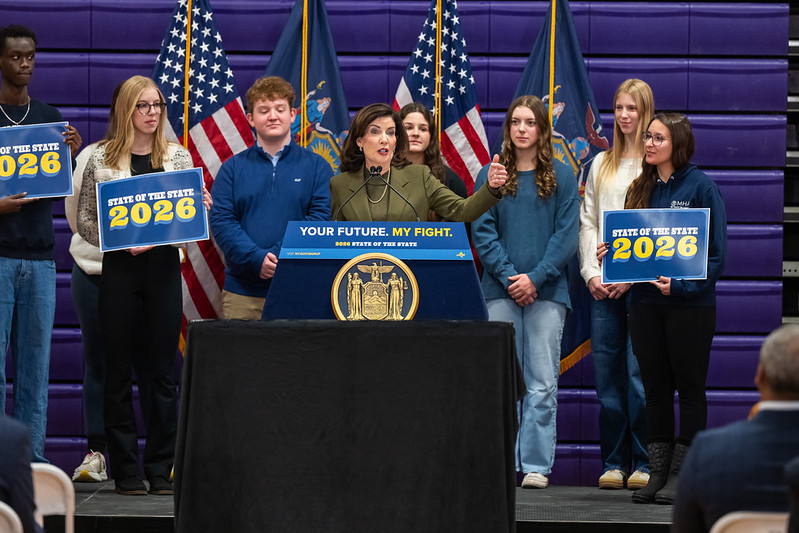
ALBANY, NY – [Photo: Darren McGee/ Office of Governor Kathy Hochul]
Governor Kathy Hochul unveiled her first State of the State proposals, aiming to strengthen online safety for New York’s children and address the youth mental health crisis. The new legislation targets online predators, scammers, and harmful AI chatbots, while also introducing a first‑in‑the‑nation statewide expansion of Teen Mental Health First Aid training to help young people recognize and respond to mental health and substance‑use challenges among peers.
“As New York’s first mom Governor, the well-being and safety of our children has always been one of my top priorities, and today we are continuing to break new ground to give our kids the tools and safeguards they need to contend with the unprecedented mental health challenges and real-world dangers that can sometimes be a byproduct of navigating today’s digital world”, Governor Hochul said. “These proposals will create a nation-leading standard that will ensure our kids’ safety in online and real -world environments where they spend time”.
The plan expands age‑verification requirements, ensuring platforms — including gaming services — must verify users more rigorously. It also establishes “privacy by default,” setting children’s accounts to the highest privacy settings so non‑connections cannot message them, view their profiles, or tag them, and disabling location settings automatically. Children under 13 would need parental approval for any new connections.
The proposal further restricts certain AI chatbot features for minors and requires platforms to give parents the ability to limit their children’s financial transactions.
This package draws on existing legislation sponsored by State Senator Andrew Gounardes and Assemblymember Nily Rozic.
Regarding the Teen Mental Health First Aid training, the Governor is proposing to make available to every 10th grader in New York State. The plan would be phased in to reach more than 180,000 students each year, ensuring that most high schoolers gain basic skills to support their own well‑being and that of their peers.
The program, designed for ages 15 to 18, teaches students how to identify and understand signs of mental health and substance‑use issues, the effects of bullying and school violence, how to have supportive conversations or seek adult help, and the importance of self‑care and available support systems.
The initiative also includes Youth Mental Health First Aid training for adults who work with young people in schools and community settings. This nationally recognized curriculum covers common youth mental health challenges, typical adolescent development, and a five‑step action plan for assisting young people in both crisis and non‑crisis situations.