CHANIA – [Photos by Π.Σ.Κ.]
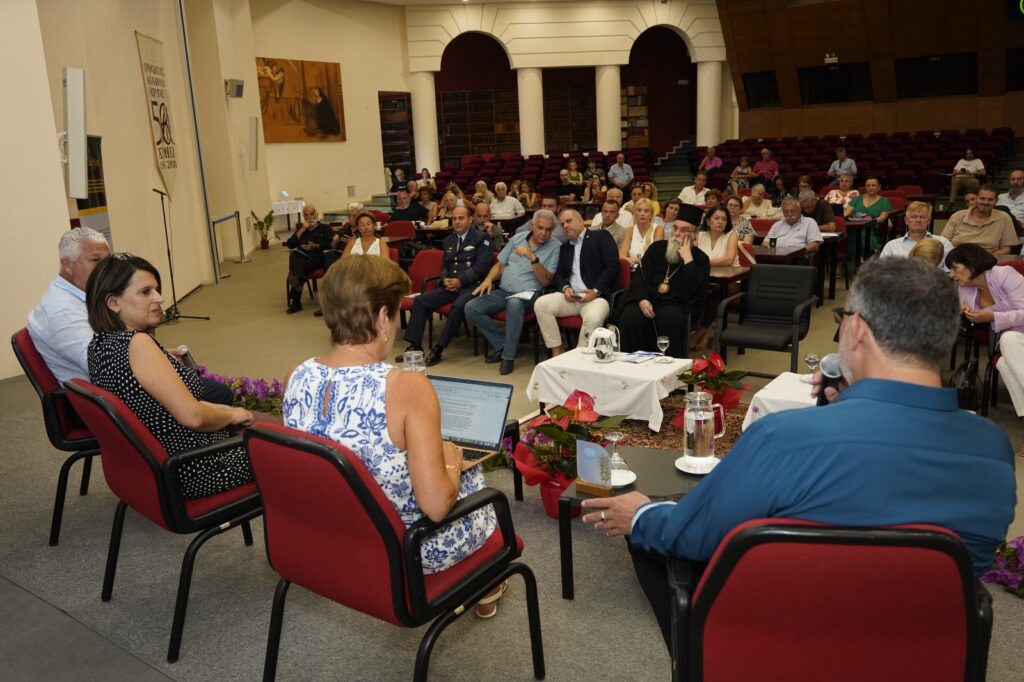
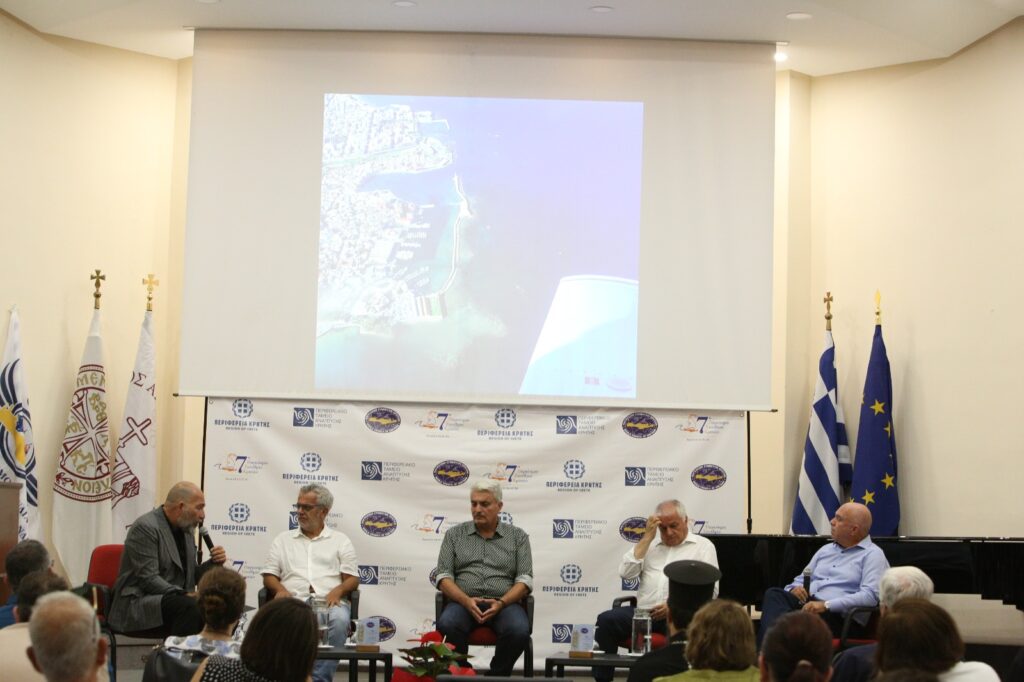
With the participation of representatives of the Cretan Diaspora from around the world, as well as prominent figures from politics, academia, business, and culture, the proceedings of the 7th World Convention of Cretans officially began on Thursday, July 23, 2026, at the Orthodox Academy of Crete in Kolymbari, Chania.
Organized by the World Council of Cretans (WCC) under the central theme “Crete and the Cretans of Today and Tomorrow,” the Convention represents the most significant global gathering of Cretans from around the world with their ancestral homeland. It aims to serve as a meaningful platform for dialogue, cooperation, and the development of proposals that will contribute to the future of Crete and the global Cretan community.
Crete Welcomes Cretans from Around the World
The events of the 7th World Convention of Cretans officially and ceremonially began on Tuesday, July 21, in Chania, with two highly symbolic events highlighting the unity of Cretans worldwide and their deep connection with their historic homeland.
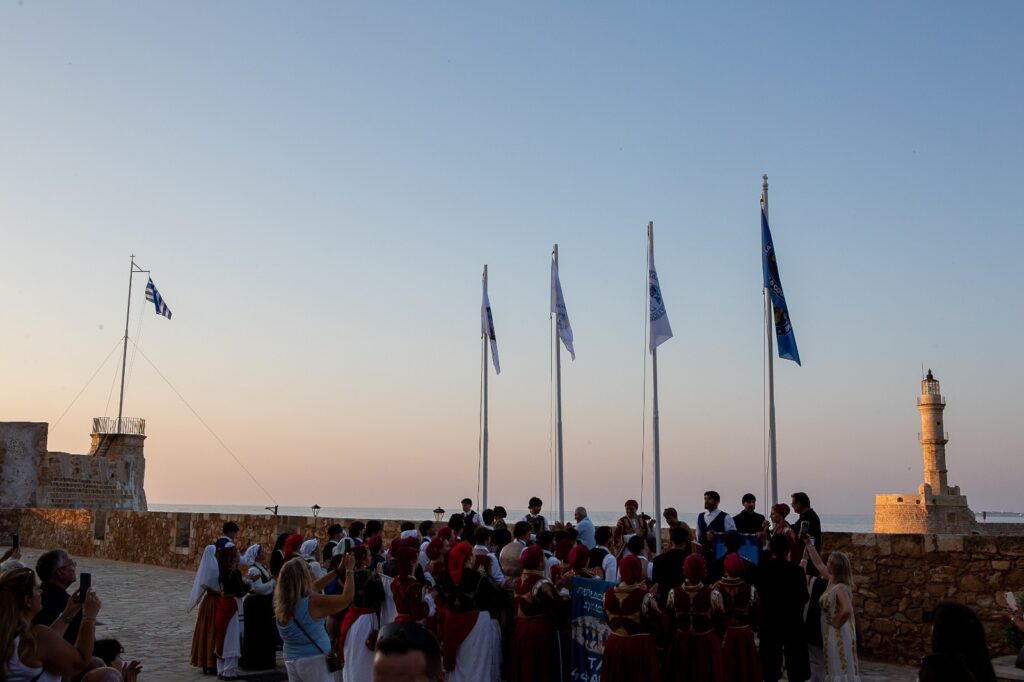
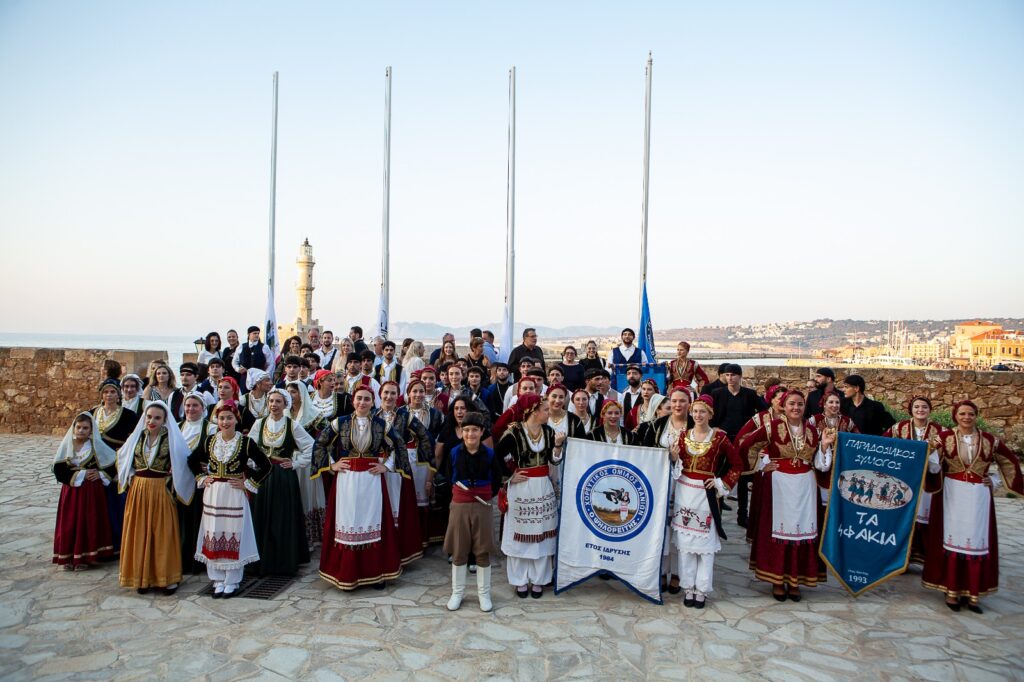
At the historic Firkas Fortress, the official Flag-Raising Ceremony of the member organizations of the World Council of Cretans took place, with the presence of representatives of Cretan organizations from Greece and abroad. The flags of the organizations flew throughout the Convention as a symbol of their shared journey, unity, and common vision for the Cretan Diaspora.
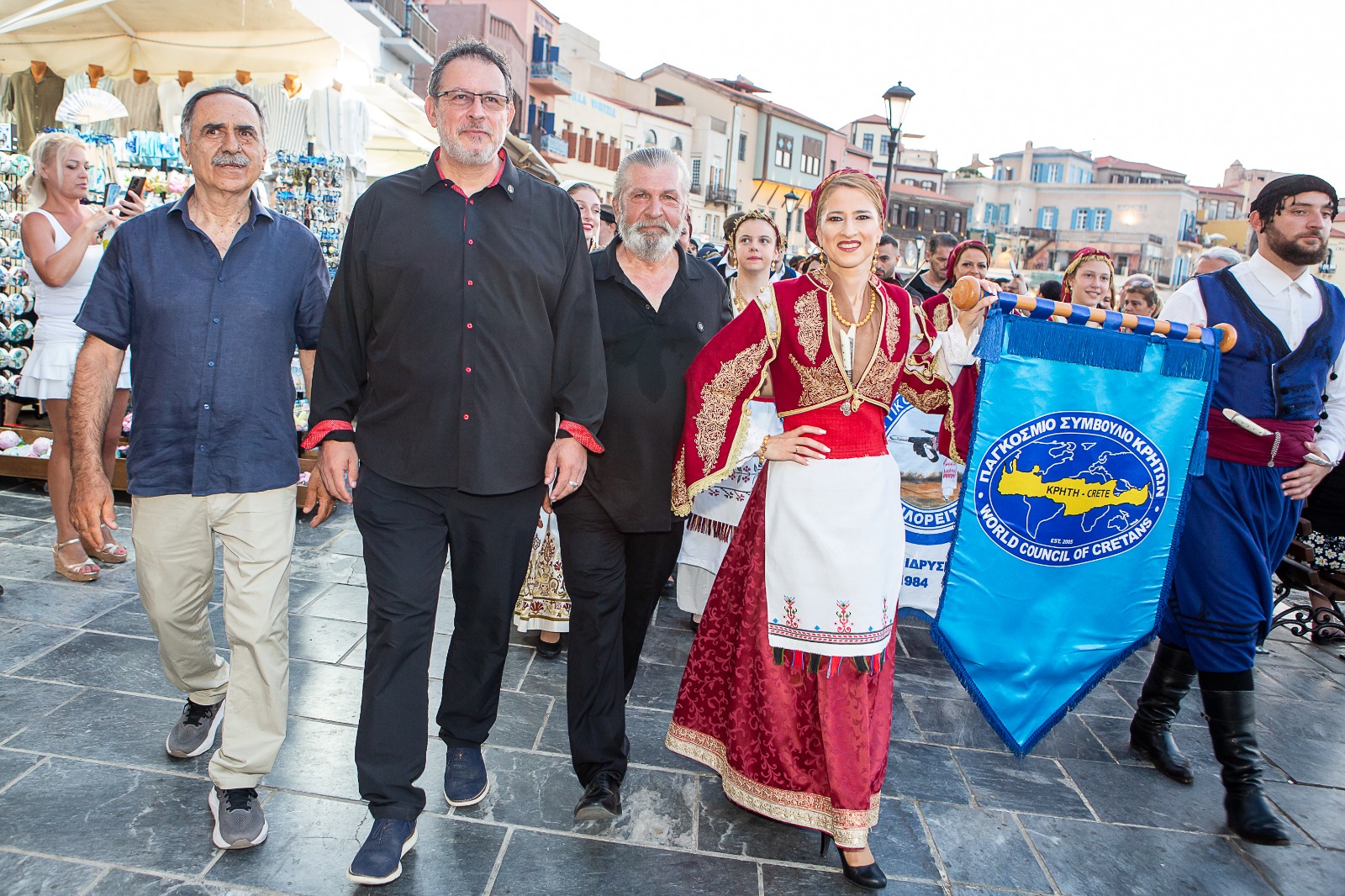
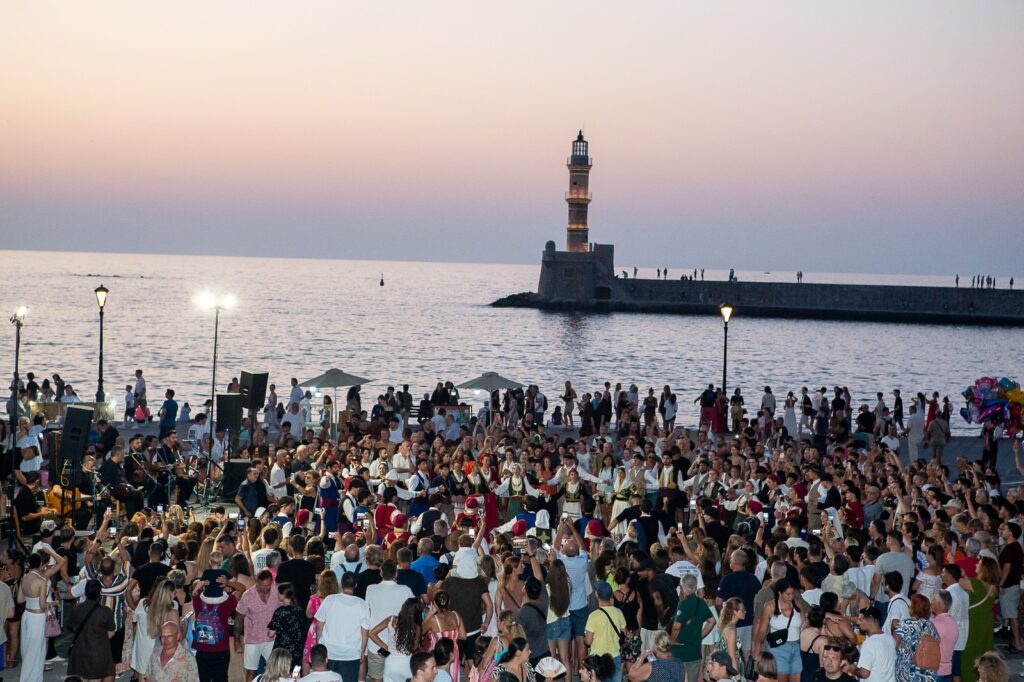
This was followed by the impressive “Strata of Cretans Around the World” procession at the Venetian Harbor of Chania, a major celebration of culture and tradition organized in cooperation with the Municipality of Chania, welcoming delegates and visitors from every corner of the world.
The event featured dance groups and delegations of the Cretan Diaspora from the United States, Australia, Europe, Greece, as well as the traditional cultural associations of Chania “Ta Sfakia” and “Psiloritis.” Participants brought the spirit of Cretan tradition and the global presence of Cretans to the streets of the historic city center.
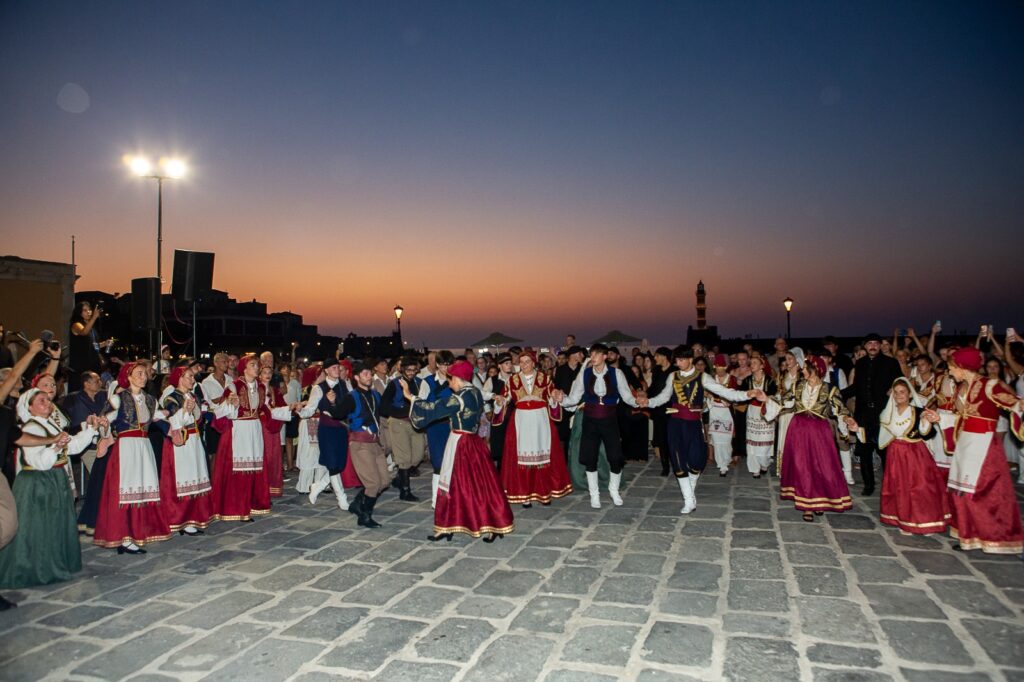
A significant contribution to the success of the events came from the Municipality of Chania, as well as the Deputy Mayor of Culture, Nektarios Psaroudakis, who, together with his team, actively supported the pre-convention activities and welcomed the Cretan Diaspora to the city of Chania.
The evening concluded with an authentic Cretan celebration at the Venetian Harbor, featuring renowned Cretan musician Manolis Kontaros and his band. The sounds of Cretan music energized the audience and visitors of the city, creating an atmosphere filled with emotion, joy, and pride in Cretan heritage.
The event was a powerful reminder that music, dance, and tradition continue to serve as strong bonds connecting Cretans wherever they may live around the world.
First Day: The Power of the Diaspora as a Force for Development
During the opening day of the Convention, the main themes focused on the Diaspora, economy, and development. Speakers highlighted the critical role of the Cretan Diaspora in preserving the Greek language, cultural identity, and ties with Crete, while emphasizing the need to strengthen cooperation between the Greek state and organized communities abroad.
The discussions also highlighted the potential of the Cretan Diaspora as a valuable national and developmental asset for Greece and Crete.
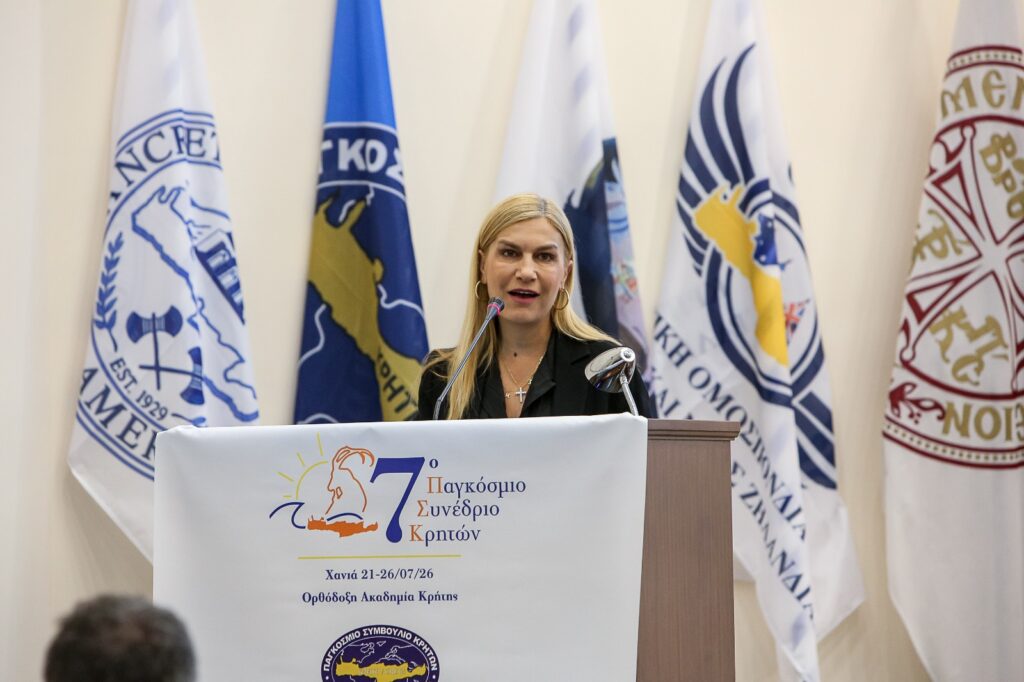
A highlight of the day was the keynote address by Deputy Minister of Migration and Asylum Sevi Voloudaki, titled “Crete in the World and the World of Crete,” followed by a discussion on the role of the Diaspora in the country’s development.
The prevailing message was that Greece can and must utilize the immense human, scientific, and entrepreneurial capital of Greeks abroad as a strategic advantage for the future.
Special attention was also given to the remarks of former Minister Anna Diamantopoulou, who described the World Council of Cretans as one of the most organized and dynamic networks of global Hellenism. In her address, she emphasized that Crete can become the first comprehensive example of a new relationship between Greece and its Diaspora, through a new development partnership between Crete and the global Cretan community.
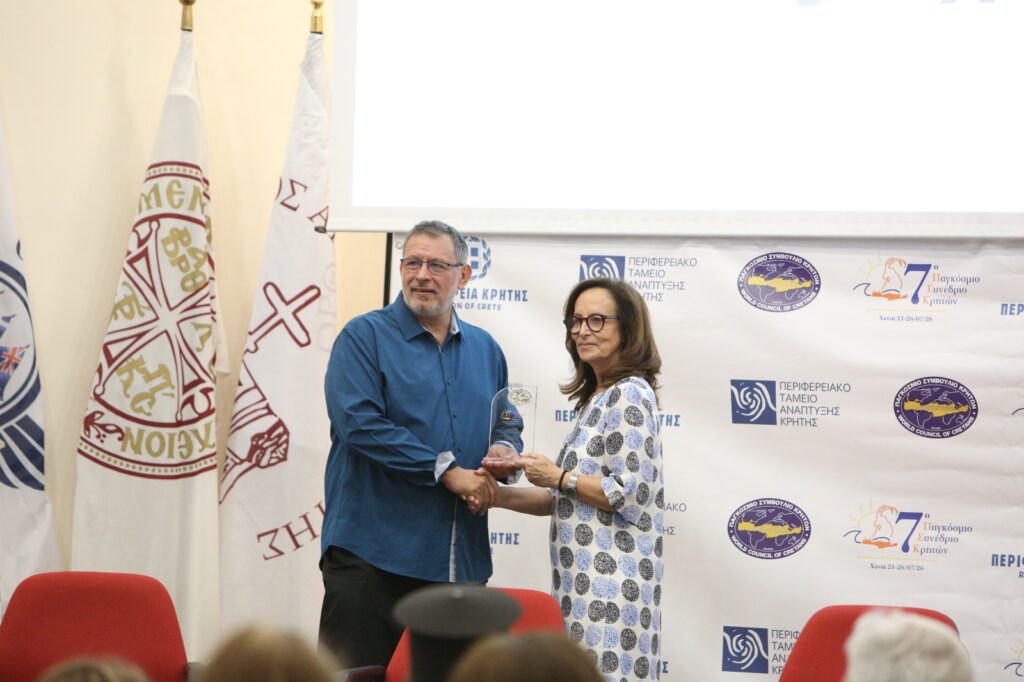
A common conclusion among the speakers was that the Greek Diaspora is not merely a timeless guardian of the Greek language, history, and culture, but an active partner in shaping the future of the country. The message that emerged was that Greece “wins its Greeks back” when it creates meaningful bridges of cooperation, participation, and contribution with communities abroad.
Particular emphasis was placed on the younger generation of Cretans abroad, who are seeking modern ways to connect with their ancestral homeland. Discussions highlighted the need to strengthen educational and cultural exchanges, promote the Greek language, and create new opportunities for young people to maintain meaningful connections with Crete.
A key focus of the discussions was also the need to connect Crete with global networks of knowledge, innovation, and entrepreneurship. Speakers emphasized that Crete possesses strong academic and research institutions, exceptional human capital, and a highly active Diaspora—elements that can form the foundation of a new internationally oriented development model.
The Convention highlighted the importance of strengthening cooperation and partnerships, moving “from the individual mindset of I toward the collective vision of we.”
Within this framework, the proposal for the creation of a Global Innovation and Development Network of Crete was presented. The network would connect academic institutions, research centers, businesses, and Cretan scientists and professionals around the world, creating new opportunities for collaboration and growth.
Experiential Workshops: Culture, Tradition, and Identity
Alongside the Convention’s main sessions, three experiential workshops highlighted the culture, traditions, and unique characteristics of Cretan identity.
A special highlight was the oral history and cultural memory workshop “Crete Remembers…”, designed and implemented by historian and Education Advisor Chara Andreadou, documentary filmmaker, educator, and Director of the Chania Film Festival Matthaios Frantzeskakis, and filmmaker Kostas Kosmadakis.
Through experiential activities, interview techniques, life stories, and creative storytelling exercises, participants explored oral history as a valuable tool for preserving the collective memory of Crete and the Diaspora. Particular emphasis was placed on migration experiences, intergenerational stories, personal narratives, and the transformation of individual memories into living cultural records for future generations.
The olive oil tasting experience, organized by the Cretan Sensory Evaluation Laboratory (ASR) and Terra Creta, also attracted significant participation.
Featuring the iconic Cretan olive varieties Koroneiki, Tsounati, and Hondrolia, participants had the opportunity to discover the unique aromas and flavors of Cretan olive oils, learn about the evaluation process, and discuss with industry professionals the exceptional quality and international significance of a product that serves as one of Crete’s most important ambassadors worldwide.
Equally impressive was the Cretan Dance Workshop, organized by the Traditional Cultural Association of Chania “Ta Sfakia”, led by Sifis Papasifakis.
Participants learned about the history, movements, and philosophy behind traditional Cretan dances, experiencing firsthand one of the island’s most important elements of intangible cultural heritage. The workshop became a genuine celebration of culture, strengthening the connection of younger generations of the Diaspora with the roots, values, and traditions of Crete.
A Message of Unity and Vision for the Future
Welcoming the delegates, the President of the World Council of Cretans, Nikos Kastrinakis, emphasized that the Convention is not simply a gathering of Cretans from around the world, but a significant opportunity for meaningful dialogue, cooperation, and the development of proposals that will contribute to Crete’s future.
He stressed that the greatest challenge is passing on the values, history, and cultural heritage of Crete to future generations, both on the island and within Diaspora communities worldwide.
The 7th World Convention of Cretans reaffirmed from its very first day its role as the most important global forum for dialogue among Cretans worldwide, bringing together representatives of government, local authorities, academia, business, and the Diaspora.
Through its discussions, a shared vision emerged: a Crete that is outward-looking, innovative, and dynamic, utilizing the strength and talent of its people in every corner of the world to shape the future.
The proceedings of the 7th World Convention of Cretans continue with sessions dedicated to climate change and the environment, education and culture, as well as inclusion, social responsibility, and volunteerism, reaffirming the Convention’s role as the leading global gathering of the Cretan community.