ATHENS – Greek News USA Staff
It’s an early Saturday evening at Plato’s Academy, the nearly 35-acre site of mostly trees where the famed philosopher strolled from 387-347 B.C. as part of a teaching plan while walking with students.
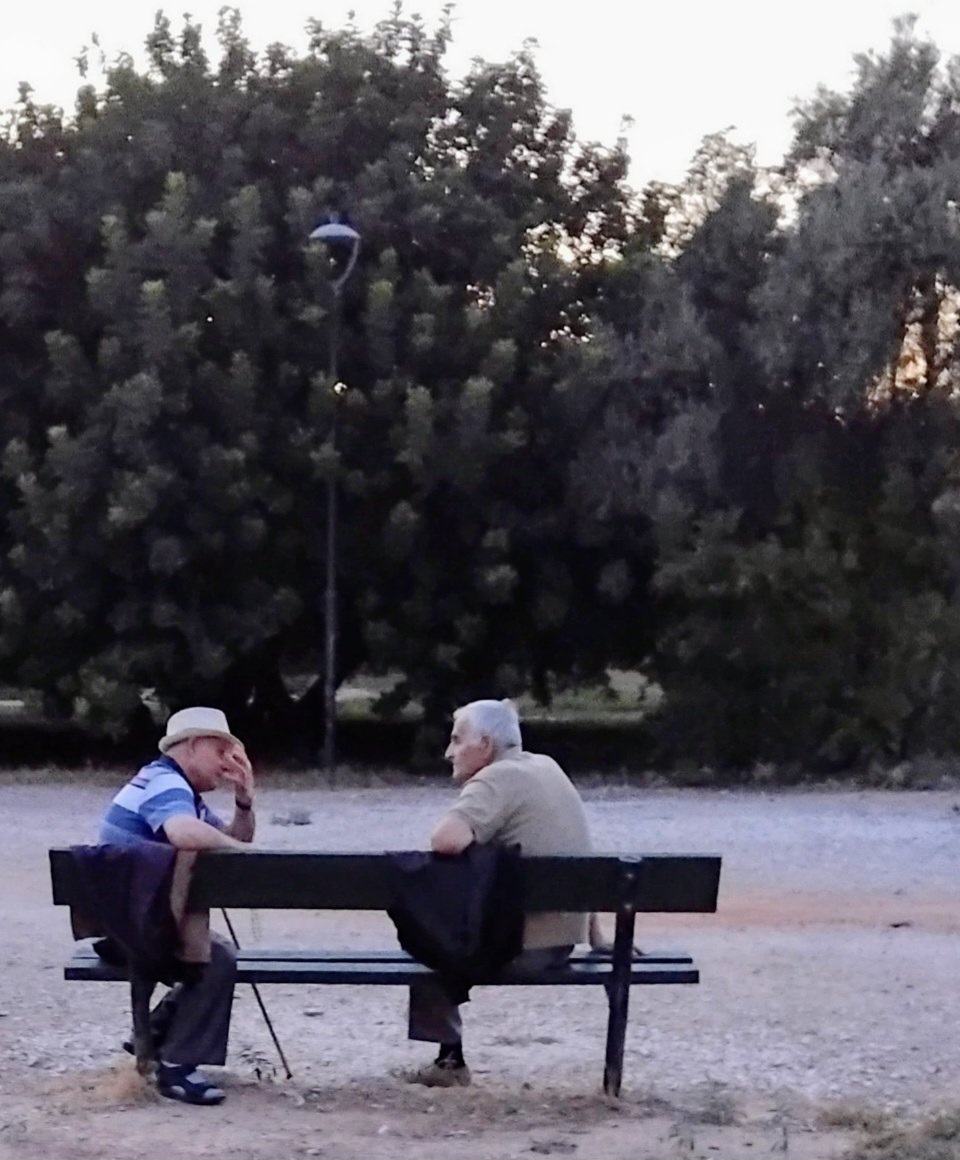
Now there’s a playground, a vandalized digital museum, uneven and rocky paths that make it difficult to push a stroller, unkempt grounds showing few signs of maintenance, but plenty of people socializing, running, sitting on benches and talking and music from a nearby cafe wafts over.
What’s not there is any sign of a planned renovation of the site announced 3 ½ years ago and designed to recognize an area that was one of the most important sites of learning in human civilization, now almost forgotten.
“I’m 24 and it’s been like this since I was 10,” Laura Kore told Greek News USA as she walked there with her aunt. She’s not holding her breath waiting for the promised improvements.
“It’s taking so long because of how the system works in Greece,” she said, almost sighing. But she hopes it happens. “It would be amazing,” she added, before adding: “But I think it won’t be fixed for many years.”
Graffiti is sprayed on the entrance. There are cardboard houses for stray cats who use the grounds as a litter box, makeshift chicken coops, but no guards nor surveillance to protect a site sacred to lovers of Ancient Greece.
It’s been 2400 years already since the grove was being used and today what remains includes the grimy remains of archaeological remnants in open, unfenced pits across the uncut laws, including the Gymnasium where students trained physically and mentally.
There’s also what’s left of the Palaestra, a square wrestling school with internal columns and the Sacred House, which predates Plato. But don’t expect to be dazzled, and most people walk on by, preferring to to walk dogs, have picnics, or shoot hoops at a basketball court.
Greece has a history of not always caring for its history, the buzz of Christopher Nolan’s film The Odyssey bringing people to the island of Ithaca where they find unexcavated stone terraces, terraced wall remnants, and multi-level foundation piles.
Those looking for information about the man for whom the site is named – and his students – that included Aristotle – will find a digital museum, a small multimedia exhibition center with interactive screens that demonstrate Plato’s philosophy. But it’s often vandalized.
Plato founded the school after returning to Athens from his travels in Sicily and Italy but instead of a university building his academy was originally the olive trees, under which he gave lectures.
It’s not advertised as a tourist hot spot and the site – besides locals who use it as a park – sometimes brings devotees of the philosopher and his peers, as well as students, academics, Philhellenes, and those hoping to be thrilled by standing where Plato and Aristotle did.
School for Thought
Prepare to be underwhelmed though. It’s a much-neglected site in the working-class densely-populated neighborhood of Kolonos where many residents prefer it be kept the way it is so that the area isn’t built up.
“It needs to be fixed but I fear gentrification and the area would change,” Ellie, one of the owners of a cooperative cafe on the edge of the grounds, told Greek News USA about worries improvements could raise rents. “If it’s just flowers, it’s okay,” she said. “It’s not just a park. It’s a meeting place and there’s birthday parties and community events,” she said.
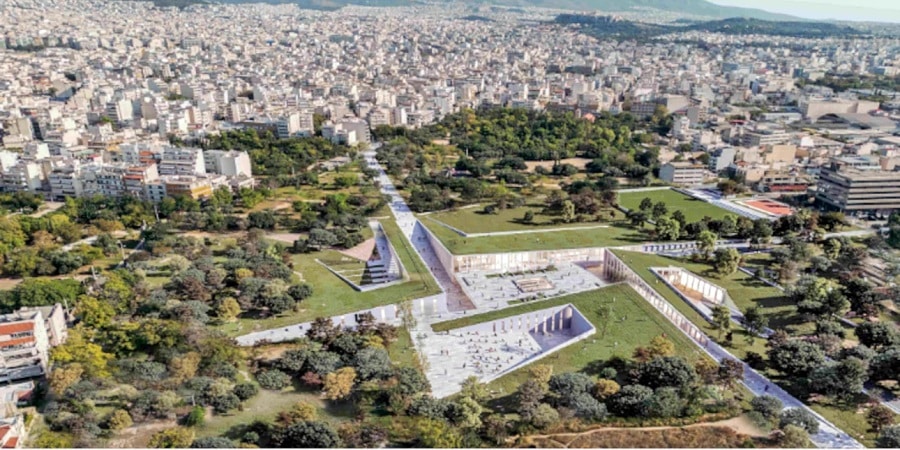
It is supposed to be much more. In 2023, the Culture Ministry and officials unveiled the idea of what they wanted there, including the country’s first so-called “green museum,” that would be partly underground and have grassy roofs.
The first phase was for €3.8 Million ($4.36 million) in state and municipal funding to regenerate the immediate green space, including reconstructing playgrounds, landscaping, structural safety paths, lighting and building a 500-seat amphitheater.
That’s part of a €101 Million ($115.85 million) Capital Master Fund, part of which will come from the European Union and Greece’s cohesion funds (specifically through Greece’s National Strategic Reference Framework.
After a competition, Tsolakis Architects won for a design that incorporates the green surroundings that have seen little maintenance into housing the museum, said the architectural site Design Bloom when it was announced.
The site is one of the few larger green spaces in Athens, surrounded by concrete high-rises, some spackled with graffiti, and tucked away from main roads in a labyrinth of narrow roads with heavy traffic.
“Today, the archaeological site of Plato’s Academy is in a sad state of neglect: trash, eroding walls, rusty fences or no protection at all, and only very few informational sign boards,” Rainer Ebert, a lecturer in the Department of Philosophy at the University of Houston wrote in 2015, and it’s much the same.
What’s holding it up? The usual in Greece: a sluggish bureaucracy, engineering studies, municipality differences with the state, coordination between the ministry and Greece’s Archaeological Council (KAS).
Neighborhood activist groups also objected to plans to remove as many as 300 trees although Design Bloom said the design focuses “on the harmonious symbiosis of two opposing forces in the region – the impenetrable mass of the city and the enclosed grove of the park containing the archeological excavations.”
For now, there’s been no drumbeat to speed the plans but neither was there a rush when Plato was walking his students through lessons while walking through the grove and under the trees.
“Never discourage anyone … who continually makes progress, no matter how slow,” he said. His lessons endure almost 2 ½ millenia later and Kore said when she’s on his same path she sometimes thinks: “What would he imagine this place would be like.”