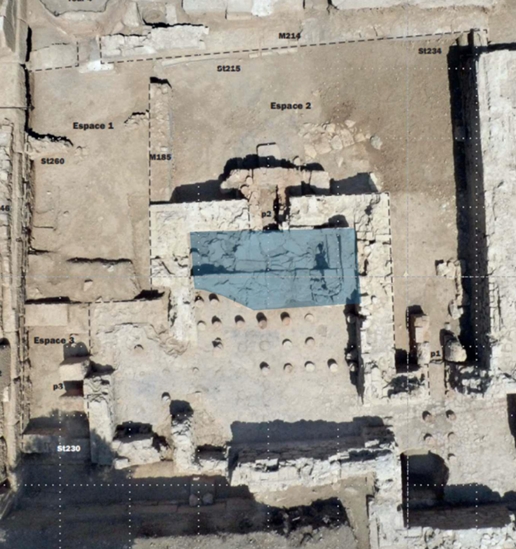
ATHENS – [ANA-MPA] [Photos: Ministry of Culture]
The Ministry of Culture is proceeding with the restoration and enhancement of the Roman Baths in Eretria, an important archaeological complex that sheds light on the history and everyday life of the city during the Roman period, according to an announcement by the Ministry.
The project aims to protect the archaeological remains, improve the appearance of the site and highlight its architectural character, while respecting the monument’s authenticity and its archaeological setting. The restoration of the baths forms part of the Ministry of Culture’s broader plan to link the monuments within the archaeological site of Eretria and create a coherent network of accessible archaeological sites.
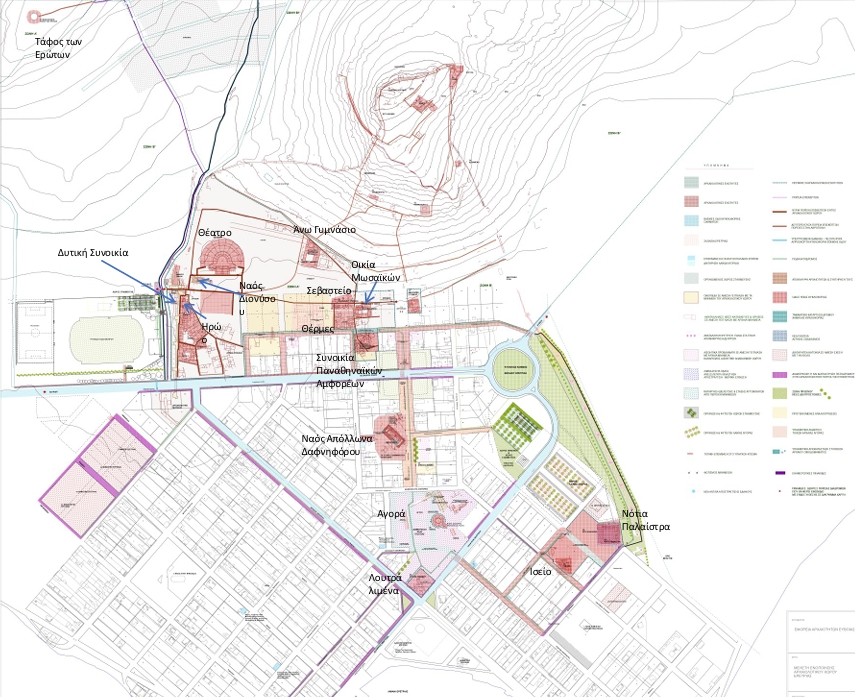
The aim is to highlight the ancient city’s historical evolution over time and offer visitors a comprehensive sightseeing experience, the announcement also noted. The architectural study, prepared by the Swiss School of Archaeology in Greece, is fully aligned with the recently approved study for linking the monuments within the archaeological site of Eretria. The latter is being implemented by the Ephorate of Antiquities of Euboea and is included in the Regional Operational Programme “Central Greece 2021-2027”, according to the same announcement.
Culture Minister Lina Mendoni said that “the archaeological site of Eretria is the most important archaeological site in Euboea (Evia), with monuments that reflect the city’s long history. Decades of excavations conducted by the Archaeological Service and, above all, by the Swiss School of Archaeology in Greece, since the 1960s, have brought to light significant buildings and architectural complexes associated with both the public and private life of the ancient city.
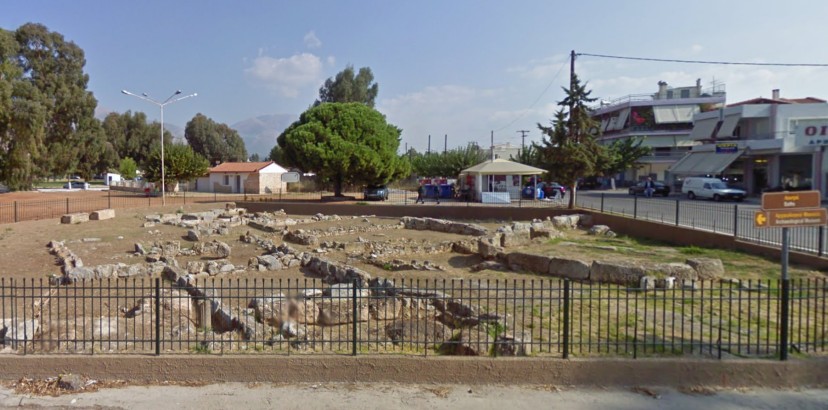
These finds form a unique archaeological complex, a ‘living’ museum emerging from within the modern urban fabric and defining the identity of present-day Eretria. They provide evidence of the area’s continuous use over time and contribute to a fuller understanding of the city’s development during the Roman period. Through their restoration and enhancement, we are protecting the authentic remains and making both the function and the historical significance of the monument easier to understand.
This intervention forms part of the Ministry of Culture’s broader plan to link the archaeological sites of Eretria, with the aim of creating a unified, organised and accessible complex. We seek to establish meaningful connections between the baths, neighbouring archaeological sites and existing or planned visitor routes, so that visitors can enjoy a more comprehensive and user-friendly experience. In this way, the monument becomes part of a broader framework for the protection, enhancement and interpretation of ancient Eretria, strengthening the coherence of the archaeological landscape and making the historical remains easier to understand, while also reinforcing their links with the modern city and the local community.”