NEW YORK, NY – UN
(ANA-MPA/G. Garantzioti) [Photos: GANP/ Dimitrios Panagos]
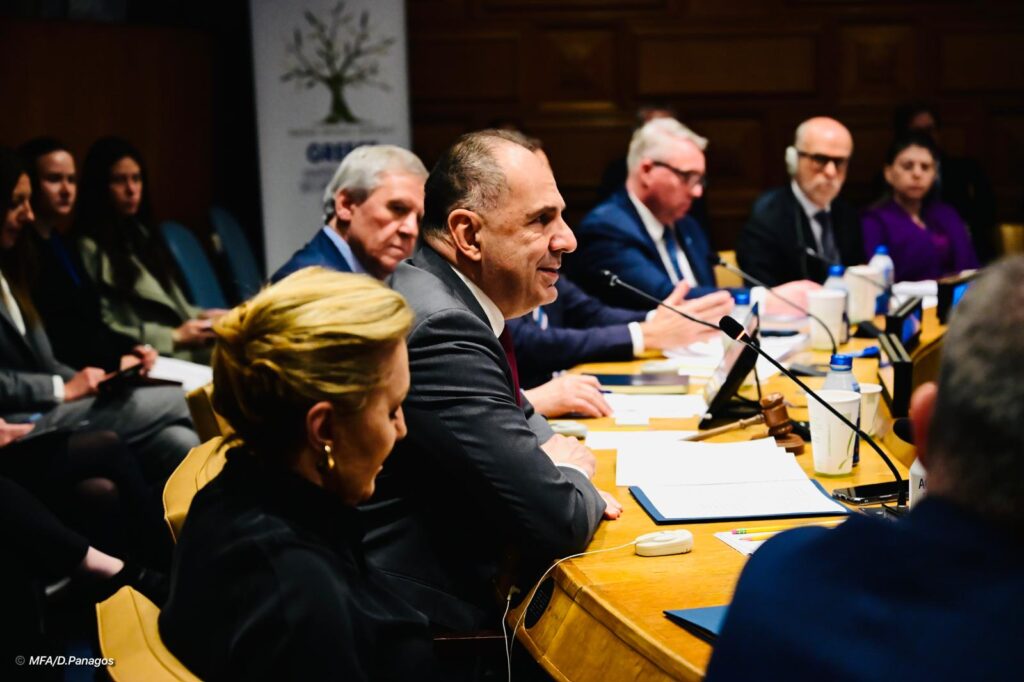
A roundtable discussion on maritime security and global supply chains was held on 29 January 2026 at the United Nations Headquarters in New York, co-hosted by the Permanent Mission of Greece to the UN and the Delphi Economic Forum.
The event, entitled “From the High Seas to the Consumer: Securing Maritime Trade and the Global Economy”, brought together policymakers, maritime security experts and industry representatives to examine the economic and geopolitical implications of instability at sea.
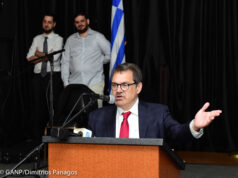
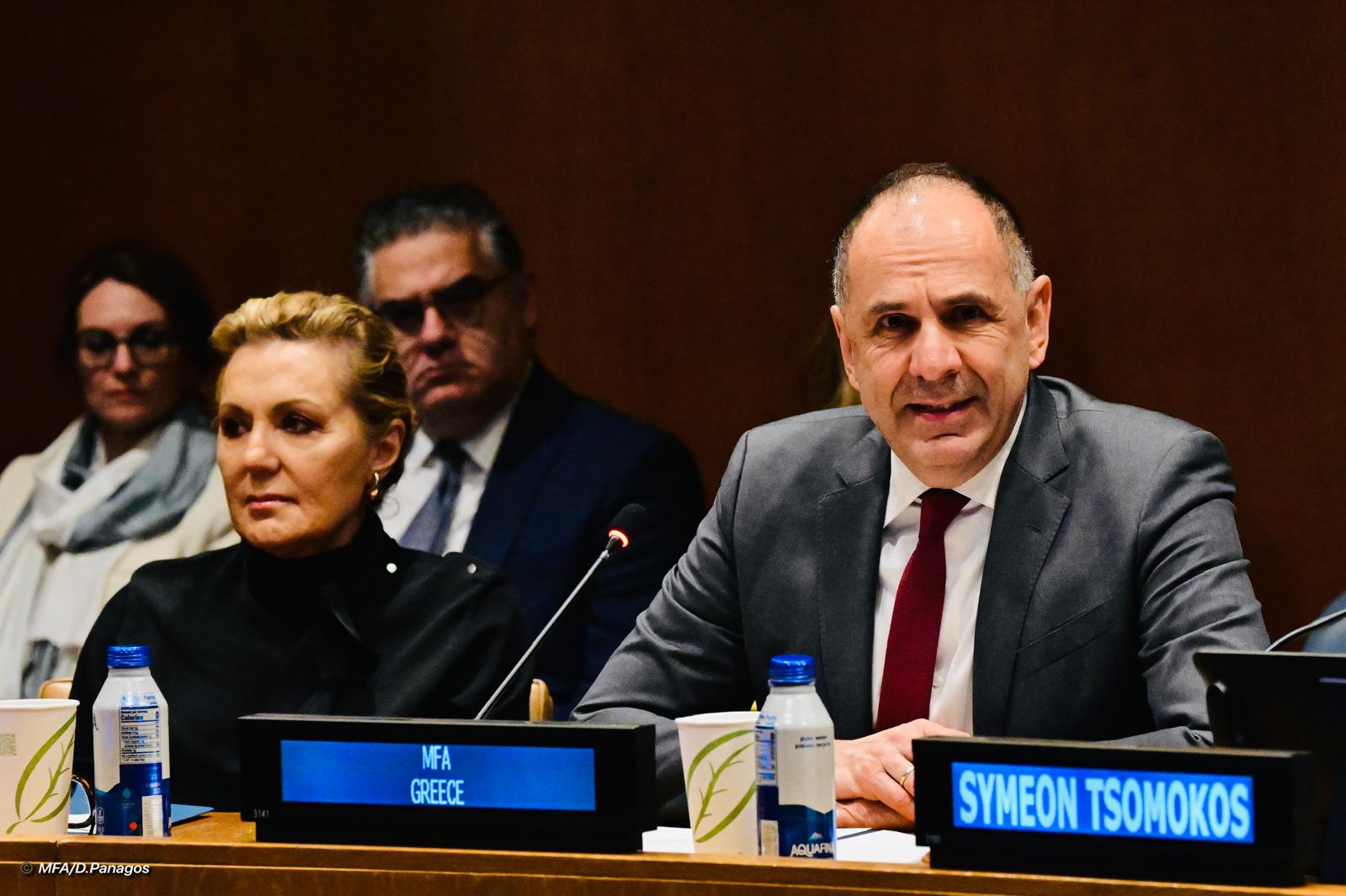
The opening speech was delivered by Foreign Minister George Gerapetritis, while greetings were delivered by the Permanent Representative of Greece to the United Nations, Ambassador Aglaia Balta, and Symeon Tsomokos, Founder and President of the Delphi Economic Forum.
Gerapetritis stressed that for Greece, “maritime security is an integral part of its national strategy,” underlining the country’s historical and geoeconomic role as “the world’s leading maritime power.” He noted that the Greek-owned fleet “represents over 20% of the global fleet and over 61% of the European Union fleet,” despite the fact that Greece represents only “0.2% of global GDP.”
He referred to the country’s commitment to international law, emphasising that “International Law and the Law of the Sea are fundamental pillars of our approach to foreign policy” and that freedom of navigation must be protected “in accordance with established rules and regulations.”
Gerapetritis noted that “over 80% of the volume of international trade is transported by sea”, which directly affects “supply chains, food and energy security”. At the same time, he warned that “traditional and emerging threats pose significant risks”, such as “piracy, terrorism, drone attacks and hybrid threats”.
At the operational level, Gerapetritis underlined that “Greece has taken a leading role in the EU Naval Operation ‘Aspides’ in the Red Sea, while also participating in the ‘Atalanta’ and ‘Irene’ operations. He also stressed the need for coordination against “the fraudulent activities related to the shadow fleet”.
To address the threats, Gerapetritis noted three main directions: action “within the United Nations, the International Maritime Organisation and the European Union” and “stronger cooperation between the maritime sector and states” and “preventive collective measures” to maintain “a strong and effective maritime order, based on rules”.
In the broader geopolitical context, he referred to the pressures being placed on “multilateralism” and “the international order based on rules”, proposing a “realism based on values”.
He reaffirmed Greece’s “unwavering commitment to multilateralism and International Law”, characterising the UN as a “unique and indispensable forum”.
In closing, he linked maritime trade to peace, noting that “secure maritime trade is not only an economic necessity; it is a foundation for peace, cooperation and mutual understanding among nations.”