LEFKOSIA – GNUSA
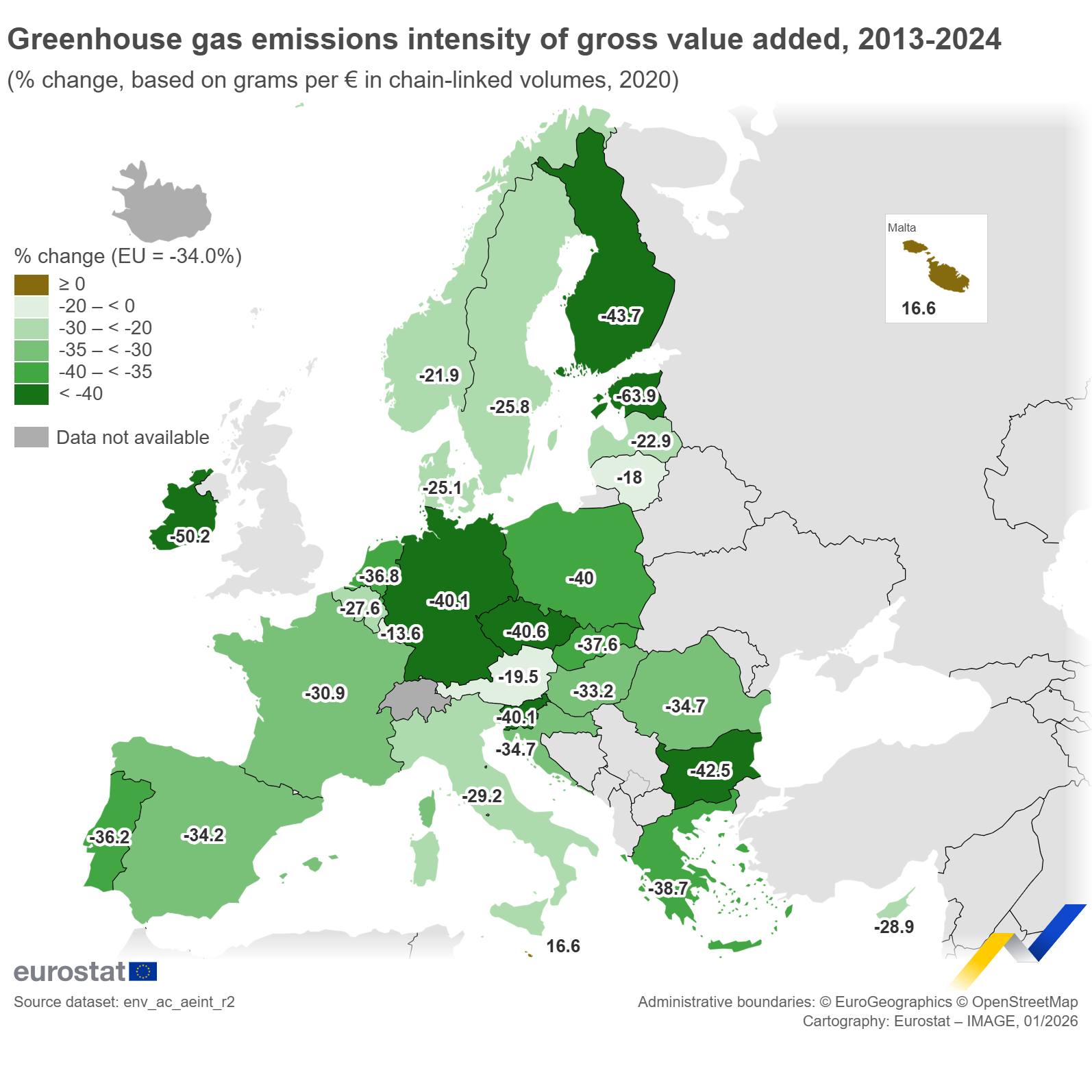
Cyprus achieved a substantial reduction in greenhouse gas emissions intensity between 2013 and 2024, posting a 28.9% decline, according to Eurostat data released on January 23.
Across the EU, greenhouse gas emissions fell by 20% over the same period, while gross value added increased by an equivalent 20%, resulting in a 34% drop in emissions intensity at the European level.
Eurostat notes that moderate improvements were recorded in Luxembourg (–14%), Lithuania (–18%) and Austria (–20%). The steepest reductions occurred in Estonia (–64%), Ireland (–50%) and Finland (–44%). Malta was the only member state to register an increase in emissions intensity, rising 17% compared with 2013.
In 2024, total greenhouse gas emissions across the EU economy — including both economic activities and households — amounted to 3.3 billion tonnes of CO₂ equivalent, marking a 1% decrease from 2023 and a 20% reduction compared with 2013.
Cyprus shows a distinct emissions profile by sector. The energy industry, covering electricity and gas supply, remains the country’s largest emitter, accounting for more than 40% of total emissions — a pattern similar to that observed in Estonia.
Elsewhere in the EU, emissions sources vary widely. Agriculture accounts for around 30% of emissions in Latvia, while manufacturing is the main emitter in nine member states. Transport and storage dominate in six countries, including Denmark, Malta and Luxembourg, where the sector contributes more than half of total emissions.
At the EU level, the electricity and gas sector recorded the strongest improvement in emissions intensity per employment between 2013 and 2024, with a 53% decline. This was followed by services (excluding transport and storage) at 25% and manufacturing at 20%. In contrast, agriculture, forestry and fishing saw emissions intensity per employment rise by 21%.