by Peter Stavrianidis, PhD. *
In times of war, one of history’s oldest and harshest truths returns with force: the first casualty is often the truth itself. Why does this happen? Because war is not fought only with missiles, armies, and strategy. It is also fought through narratives, propaganda, fear, and the manipulation of public perception. As confusion deepens and misinformation spreads, the search for clarity becomes more urgent than ever.
The present crisis in the Middle East cannot be adequately interpreted either as a simple regional military episode or as a temporary disturbance in international markets. On the contrary, it is a complex geopolitical confrontation, linked to broader strategic designs, energy security, the balance of power across greater Eurasia, and ultimately the overall architecture of international order. The central argument emerging from our thesis is that the real danger lies not so much in the immediate picture of the markets or in the number of military strikes, but rather in the possibility that the conflict may evolve into a long-term strategic ordeal with global consequences.
A first point of particular interest is the relative calm of the international markets. Despite the intensity of the military developments, stock indices, volatility, and even the rise in oil prices do not yet reflect conditions of generalized panic. This does not mean that danger is absent. It does show, however, that markets continue to price in, at least for the time being, the possibility of a controlled de-escalation. This observation is critical, because it suggests that the economic system has not yet accepted an uncontrolled regional or global escalation as the most likely scenario.
Beyond the short-term financial picture, however, in this brief analysis we will emphasize that conflict is not the product of momentary improvisation. Rather, it is presented as an expression of a broader strategic design on the part of the United States, one primarily related to the containment of China and secondarily to the shaping of a special relationship with Russia. In this sense, Iran and the broader Persian Gulf region are not viewed simply as a theater of local conflicts, but as a pivotal geopolitical space in which the control of energy flows, land and maritime trade routes, and influence over critical raw materials and strategic infrastructure are all at stake.
Equally important is the observation that the current military operation is extraordinarily large in scale and presupposes a high degree of technological and organizational preparation. The reference to thousands of strikes and to the use of artificial intelligence for target selection and management suggests that modern warfare is entering a new phase in which technological superiority acquires even more decisive significance. War is no longer conducted solely in terms of conventional military power, but also through systems of automated data processing, algorithmic forecasting, and accelerated decision-making. This changes not only operational capabilities, but also the very character of the conflict itself.
Yet despite advanced technology, the decisive factor remains time. In every war, the crucial question is which side will succeed in imposing its will and which will be forced to limit or abandon its objectives. In the present case, the problem is that both sides face enormous existential or strategic stakes. For the Iranian regime, the conflict has the character of a struggle for survival. For the United States, on the other hand, a withdrawal without a tangible strategic result would be interpreted internationally as a sign of weakness, with serious consequences for its prestige, its deterrent credibility, and its influence in the region. Therefore, both actors have strong incentives to continue, even as the cost rises.
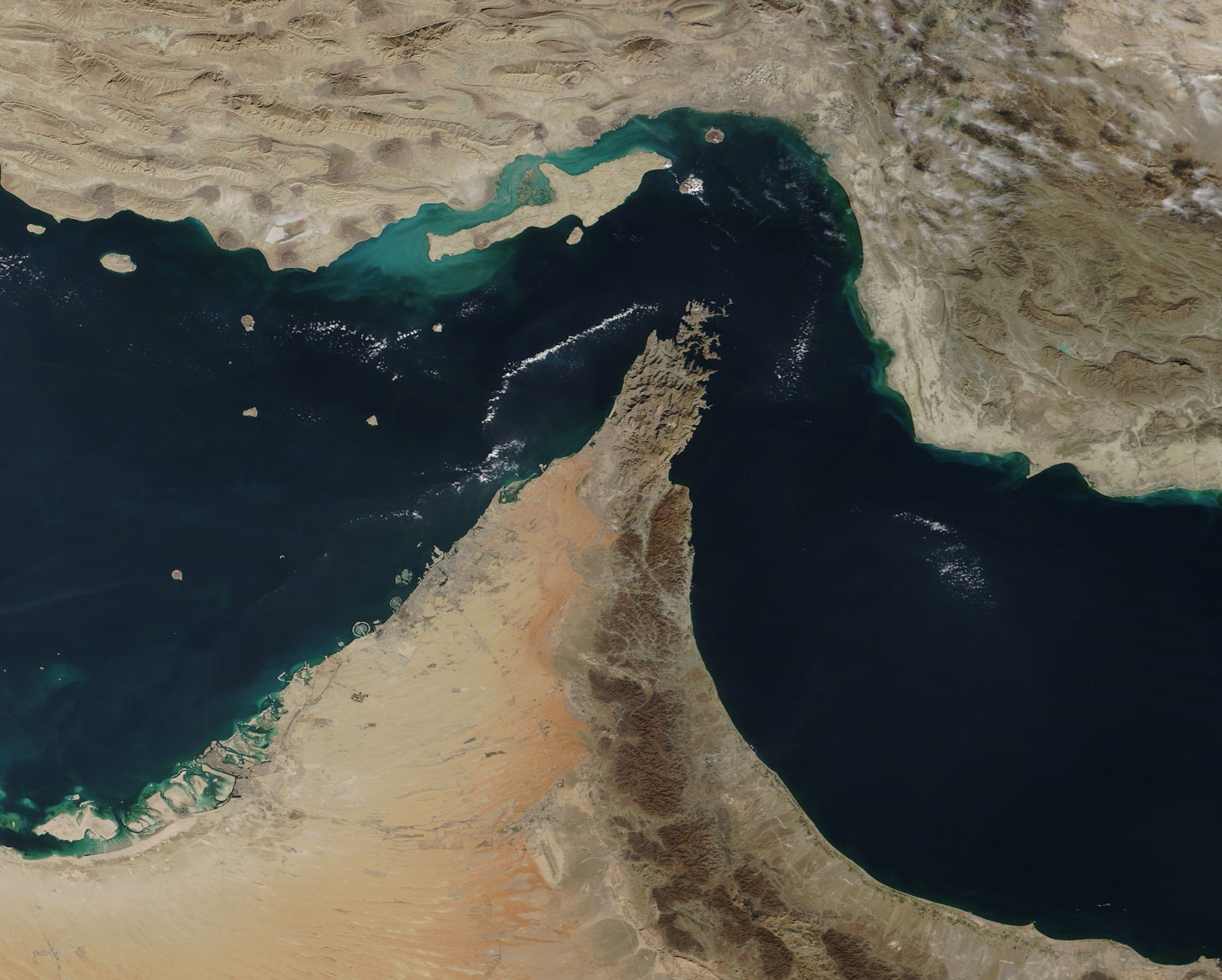
Within this framework, the Strait of Hormuz acquires decisive importance. It is not merely a sea passage of strategic interest, but one of the most important hubs of the global energy system. The prospect of its prolonged closure would not only affect oil prices but would more broadly undermine the stability of international trade and the geoeconomic position of the United States. Particularly significant is the observation that the Gulf petro-monarchies are closely tied to American power and to the preservation of the dollar as the world’s reserve currency. Consequently, securing free navigation through Hormuz is not simply a matter of regional settlement, but one that touches the very structure of American hegemony.
On the other side, Iran appears to be pursuing a strategy of attrition. Recognizing that it cannot directly compete with the United States and Israel in the realm of high technology and air power, it chooses to preserve critical retaliatory capabilities to prolong the conflict and increase the political cost for its adversary. This strategy is asymmetrical, but not ineffective. It rests on the survival of part of its arsenal, the ability to carry out periodic reprisals, and the exploitation of Hormuz as a mechanism for the internationalization of the crisis. In this way, Tehran seeks to shift pressure not only onto the military field, but also onto the diplomatic and economic spheres.
The critical question in the coming days and weeks is whether the United States will be able to meaningfully degrade Iran’s ballistic and drone capabilities. If it succeeds, it will strengthen its ability to impose its terms. If it does not, then the likelihood of a much broader escalation will increase significantly, precisely because it will not be able to end the conflict without strategic erosion. From this perspective, the scale of the bombings or the number of targets struck is not, by itself, an adequate measure of success. The essence lies in the imposition of political will upon the adversary, and this is something that, according to the events, has not yet been clearly achieved.
In summary, the crisis surrounding Iran should not be approached superficially, nor interpreted exclusively through daily news coverage or market reactions. It is a conflict in which military technology, energy security, great-power rivalry, the global position of the dollar, and the broader reconfiguration of international power all intersect. The real danger, therefore, is not only the eruption of violence itself, but the possibility that the parties involved may become trapped in a prolonged confrontation from which none will be able to exit easily without serious cost. It is precisely this dynamic that makes the present crisis not merely dangerous, but historically consequential.
*Dr. Peter Stavrianidis is Entrepreneur and Dr. of Political Sociology