ATHENS – [ANA-MPA]
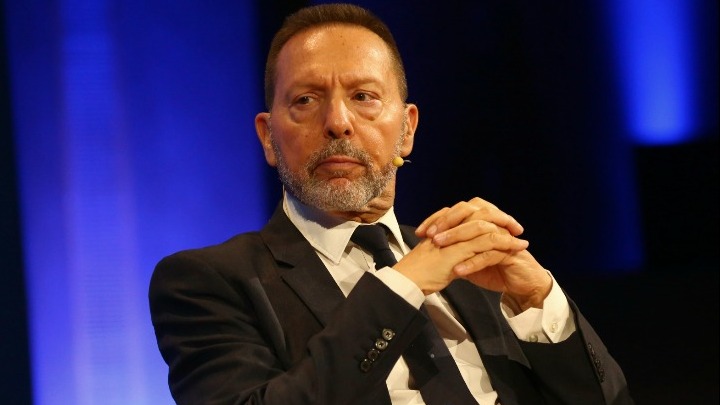
The Governor of the Bank of Greece Yannis Stournaras emphasized the need to ensure political stability, particularly in the current context of heightened international uncertainty due to the war in the Middle East, during his address at the central bank’s annual General Assembly.
He noted that “in periods of heightened uncertainty, political stability constitutes a decisive factor for economic resilience. Recent experience demonstrates that political stability and a predictable institutional framework are crucial for maintaining macroeconomic balance and for the effective management of external crises.”
Referring to the prospects for the Greek economy, Stournaras estimated that in an environment of heightened geopolitical tensions, Greece’s economic growth is expected to slow to 1.9% in 2026, primarily due to a more moderate increase in consumption and the negative contribution of the external sector.
Similarly, a significant slowdown is anticipated for the Eurozone economy, with growth projected at 0.9% (down from 1.4% in 2025) due to the impact of the Middle East conflict, increased uncertainty, and energy market disruptions, which amplify the risk of stagflation.
Despite the moderation in growth, the Greek economy is expected to continue expanding faster than the Eurozone average, confirming its enhanced resilience and ongoing process of real convergence.
Investments are projected to remain the main driver of growth, supported by the Recovery and Resilience Facility, credit expansion, and foreign direct investment. Private consumption is expected to continue increasing, supported by rising employment, wages, and disposable income, albeit at a slightly slower pace than the previous year.
Labour market prospects remain favorable, with further employment gains and a decline in the unemployment rate to 8.2%.
The downward trend in inflation is expected to halt in 2026, due to renewed external cost pressures from international energy markets. Overall inflation is projected to rise to 3.1%, remaining above the Eurozone average.
Fiscal figures are expected to remain robust in 2026, with a high primary surplus (around 3.2% of GDP) and a slightly positive overall balance, while the downward trajectory of public debt is expected to continue.
Regarding monetary policy, Stournaras highlighted that 2026 will be characterized by high uncertainty, necessitating a flexible approach. Should energy price increases risk generating broader and persistent inflationary pressures that affect medium-term expectations and wage dynamics, monetary policy is likely to become stricter.
Concerning the banking sector, prospects remain positive, as strong 2025 performance provides a favorable basis for further strengthening resilience, profitability, and capital positions. However, current geopolitical uncertainty poses risks for funding costs, credit portfolio quality, and the dynamics of credit expansion.
In conclusion, he noted that current international upheavals present not only a threat to Europe but also a clear wake-up call. Strengthening Eurozone resilience requires accelerating European integration and more effective coordination of common policies.
At the domestic level, he emphasized that maintaining political will to implement credible reform policies is key to turning crises into opportunities and shaping a modern, sustainable, outward-looking, and competitive economy.