WASHINGTON (ANA-MPA/P. Kasfikis) –
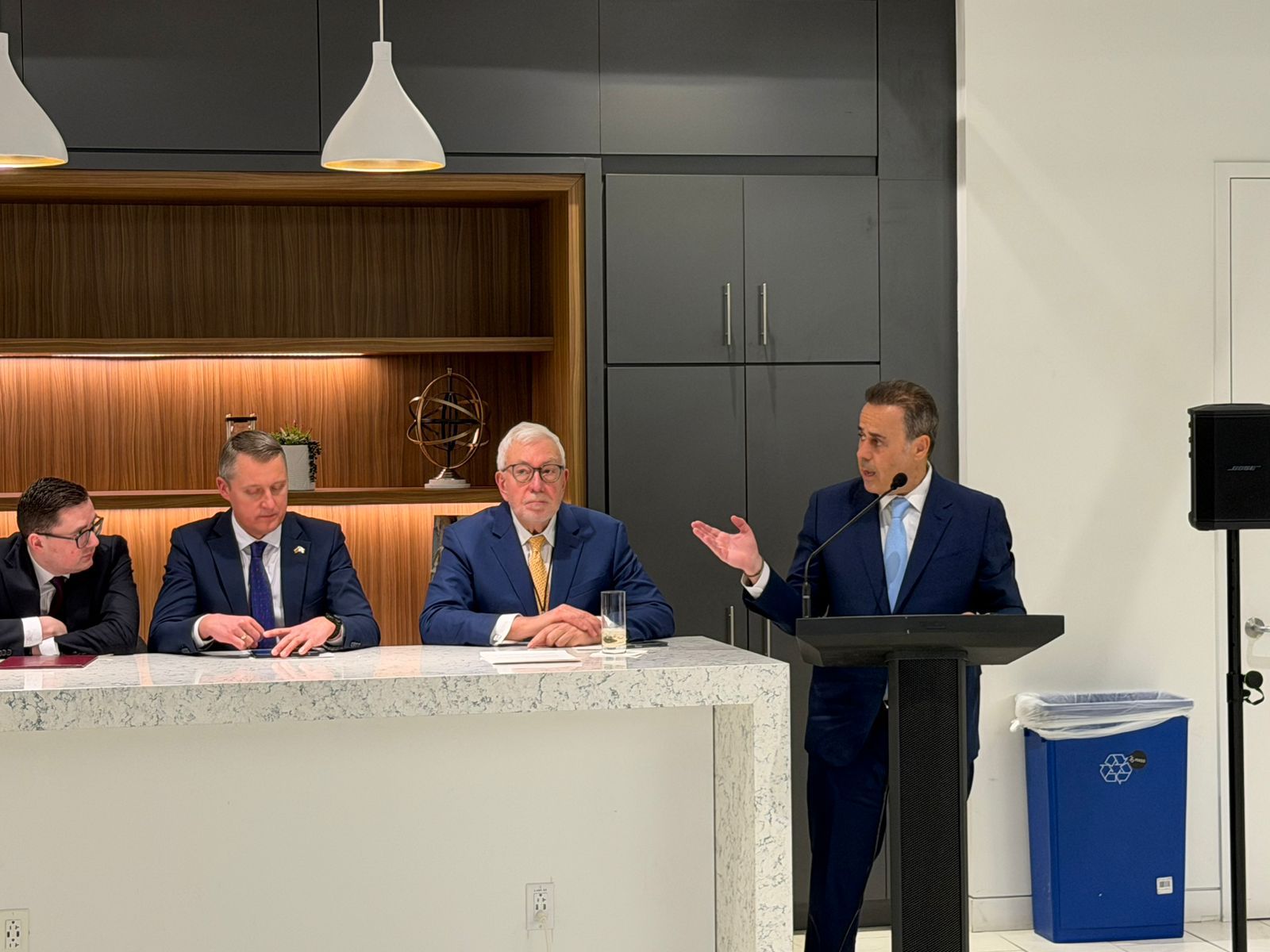
The Transatlantic Gas Security Summit held on Tuesday in Washington, D.C., at the initiative of the White House National Energy Dominance Council, had a significant impact on Greece.
Of the six energy agreements announced, five are directly related to Greek interests and the Vertical Energy Corridor. These developments strengthen Greece’s role as an LNG hub in Southeast Europe.
The summit, hosted by the Donald Trump Institute for Peace, aimed to deepen transatlantic cooperation on liquefied natural gas and accelerate infrastructure that will strengthen the region’s energy resilience.
As participants emphasized, following the November meeting in Athens, Tuesday’s meeting in Washington is considered the next practical step in implementation, with an emphasis on trade agreements and technical maturation of the plan.
A key development was the signing of new long-term agreements for the sale of American LNG by Atlantic SEE LNG Trade, a company in which AKTOR Group holds a 60% stake and DEPA Commercial a 40% stake. The agreements concern four countries of the Vertical Corridor and are estimated to strengthen Greece’s position as a key entry and distribution gateway for gas to Central and Eastern Europe.
Moreover, an agreement was also signed by the company METLEN, as part of the same effort to increase long-term flows of American LNG to the region.
Russian Gas in focus
The discussion on the ongoing flows of Russian natural gas to Europe, mainly via Turkiye, which are estimated at 17 to 18 billion cubic meters per year, was of particular importance. The issue was widely identified as a key obstacle to the commercial development of the Vertical Corridor.
This specific issue has been raised in previous interventions by US President Donald Trump, who noted that Europeans “pay billions to Russia for energy while we protect them through NATO.”
US-Europe Joint Strategic Goal
Despite broader political divergences, the summit highlighted a convergence between Washington and European governments around the goal of energy independence from Russia.
For the US, this strategy is linked to geopolitical stability in a region that is still considered vulnerable to Russian influence. For Europe, and especially for Greece, the development of new interconnections and trade flows is considered a tool for economic development and regional cohesion, with implications that touch on broader corridor projects, such as IMEC.
Regulatory Obstacles and Uncertainty
Despite political will, significant technical and regulatory obstacles remain. Issues related to the Capacity Allocation Mechanism Network Code (CAM NC) and the Tariff Network Code (TAR NC), which are considered to no longer meet market needs, were on the table.
The lack of clear regulatory and commercial certainty is acting as a deterrent for countries that are invited to sign long-term LNG contracts, despite the fact that the transition from Russian gas is set to take place in less than two years.
For this reason, a technical meeting will be held at the US Department of Energy on Wednesday with the participation of transmission system operators from the countries involved, representatives of the European Commission and energy ministries, with the aim of accelerating changes that will create a stable framework.