WASHINGTON, DC – by Petros Kasfikis, TO VIMA –
As the war with Iran reshapes the balance of power in the Middle East, a quieter shift is taking hold in Washington.
Power is no longer defined primarily by alliances or military reach. It is increasingly measured by something harder to build and harder to sustain: industrial capacity, resilience and political will.
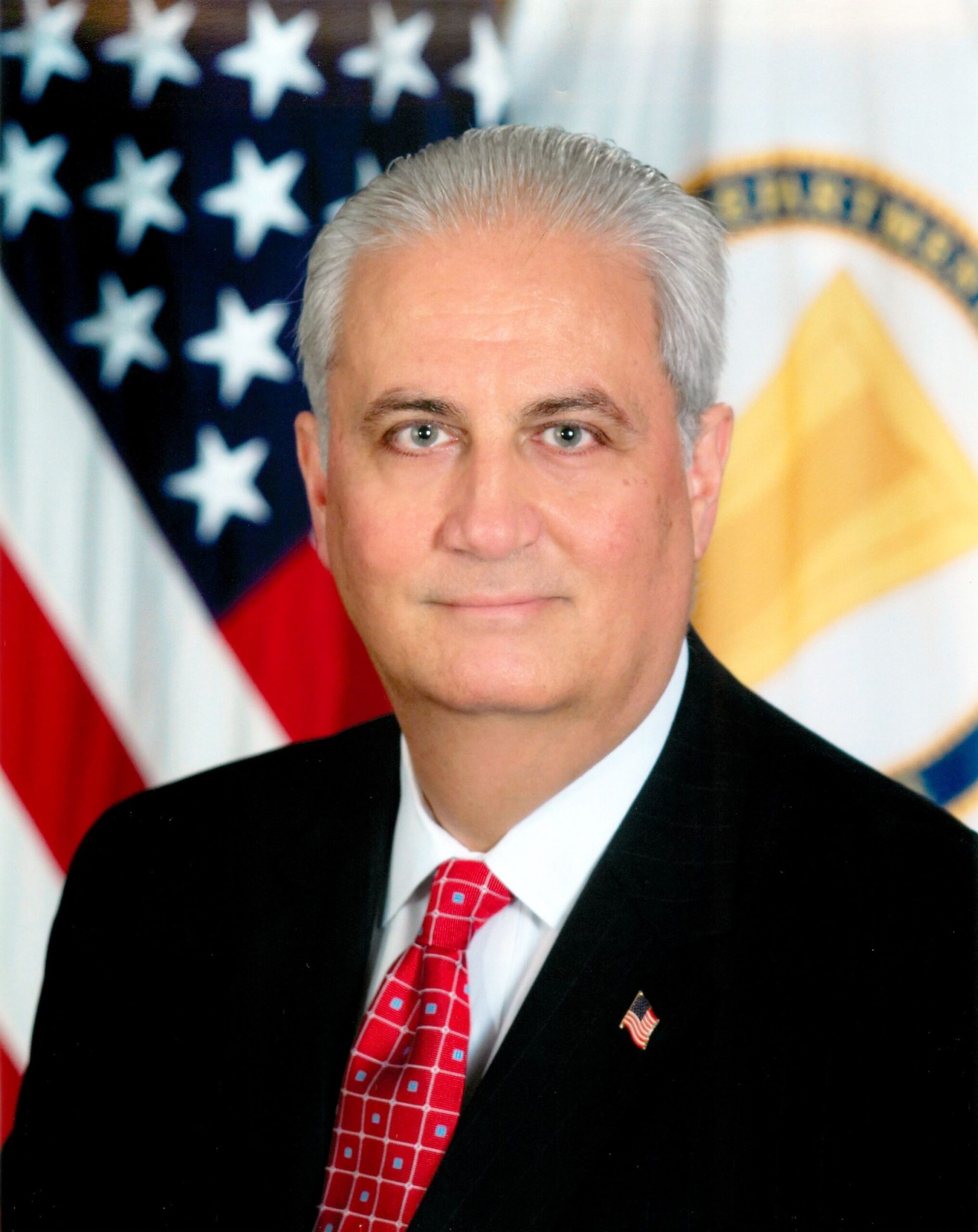
Few officials have operated at that intersection as directly as Dean Popps, whose name was anglicized over 100 years ago at Ellis Island.
Popps served from 2004 to 2010 in three and four star civilian roles. He held positions including Acting Assistant Secretary of the Army for Acquisition, Logistics and Technology, Principal Deputy, and Army Acquisition Executive. In those roles, he oversaw the procurement and sustainment of Army weapons systems and services that supported U.S. military operations at scale, both domestically and overseas.
After the fall of Saddam Hussein, he served in Baghdad with the Coalition Provisional Authority as Director of Military Industrial Conversion and as a senior adviser to the new Iraqi Ministry of Science and Technology, which he helped create.
That experience shapes how he reads the current moment. For Popps, power is not an abstraction. It is operational.
The lesson of Iraq, he argues, is not only about military force but about the limits of managing a country from the outside.
Iran without Iraq
Popps does not believe the United States is preparing to repeat Iraq.
There will be no attempt, he argues, to dismantle and rebuild the Iranian state from the ground up. Instead, he describes what he calls an “elegant theory,” a strategy built around pressure rather than occupation, with energy as its central instrument.
He describes President Donald Trump as “moving chess pieces,” using energy as “the queen on the chessboard,” with Venezuela, Iran and Cuba as three dominoes falling not to American troops but to economic pressure.
As he maintains, Trump aims to control the direction of those nations not by force, but by energy policy, a strategy intended to give the United States an advantage over China and Russia.
He suggests that internal forces and regional actors, including what he calls “other revolutionary elements,” could gradually shift the balance inside Iran, particularly as senior leadership figures are removed through American and Israeli strikes.
That is the theory. How much of it can be directed from the outside remains an open question.
Resetting the Pentagon
On the conduct of the war, Popps is more certain and more direct about what he believes the Pentagon had become.
He is supportive of Defense Secretary Pete Hegseth, including his removal of senior military leaders, which he frames as historically unremarkable. George C. Marshall dismissed more than 600 leaders before arriving at the team that won the Second World War, he notes.
But his argument goes further. In his view, the Pentagon had lost its way under successive administrations, distracted by priorities that had little to do with combat effectiveness. Hegseth, he argues, has pushed the institution back toward what Popps calls “a Spartan enterprise,” a warrior culture, promotions by merit, a singular focus on lethality.
“No other force can do what the American military has just done,” he said, pointing to the opening strikes on Iran, carried out by aircraft flying extended missions from the continental United States, refueling midair, striking targets and returning
For Popps, those strikes were not only tactical. They were meant to demonstrate something about reach, will, and restored purpose.
The constraint beneath the strategy
If there is a limiting factor, Popps returns to it repeatedly. It is the industrial base.
Over decades, he argues, the United States allowed critical manufacturing capacity to erode, outsourcing production, drawing down strategic reserves, and operating on the assumption that global supply chains would hold. In practice, they proved more fragile.
“No military power can succeed without its own industrial base,” he said.
In a prolonged conflict, production capacity can matter as much as battlefield performance. Shipbuilding, munitions, rare earth processing and supply chains are not secondary concerns. They sit at the foundation of sustained power.
He is specific about the damage done. Under President Clinton, the United States maintained 99 strategic supply depots. That number eventually fell to two. Magnet manufacturing, essential for avionics, submarines and satellites, migrated almost entirely to China.
The assumption was that global economic interdependence would substitute for self-reliance. Popps argues it was a serious miscalculation.
The current policy direction, reshoring manufacturing, securing critical materials, reviving domestic industry, is an attempt to rebuild that base. Whether it can be done at the scale and speed required is uncertain. But for Popps, the direction is right.
The current policy direction, reshoring manufacturing, securing critical materials, reviving domestic industry, is an attempt to rebuild that base. Whether it can be done at the scale and speed required is uncertain. But for Popps, the direction is right.
Alliances under pressure
These constraints extend to alliances.
Popps is openly critical of NATO, arguing that the United States has carried a disproportionate share of the burden while European allies have lagged in defense spending and strategic initiative. From that perspective, Donald Trump is not disrupting the alliance so much as forcing a reckoning with its terms.
He points to Ukraine as the sharpest test of that argument. The war in Ukraine, he argues, threatened European security but still required the United States to lead.
Concerns over the security of maritime routes such as the Strait of Hormuz have sharpened the same debate. ‘This is primarily Europe’s energy channel. So where are you?’”
For Popps, these are not rhetorical questions. They go to the core of whether alliances can function under sustained pressure or are only as strong as the United States’ willingness to carry the burden.
A personal argument about Greece
It is when the conversation turns to Greece that Popps becomes most pointed.
As a Greek American with decades inside the U.S. defense establishment, his critique carries both familiarity and impatience. Greece occupies a critical geographic position in the Eastern Mediterranean. What it has not consistently done, in his view, is translate that advantage into operational relevance.
“Greece must make up its mind what it wants to be,” he said.
When the United States promoted new air defense initiatives in Europe, including what he described as the Golden Dome effort, Romania, Serbia and Poland moved quickly to participate. Greece did not.
On defense spending, he is direct. Commitments to increase budgets matter only if they translate into capability, submarines, aircraft and drone systems, rather than expanded government payrolls.
“Let’s not play games with money,” he said.
He applies the same standard to operational behavior, and raises an episode he describes with visible discomfort. The USS Gerald R. Ford, docked at Souda Bay, curtailed its stay over concerns about crew safety ashore and relocated to Croatia.
“Shame that had to occur,” he said. “Where is the Great Western Alliance if the U.S. Navy’s most formidable weapons platform has to move out of Greece to be safe?”
For Popps, the episode is difficult to reconcile with Greece’s self image as a core Western ally. He frames the broader choice in strategic terms. Countries cannot maintain ambiguity in their alignment and expect to be treated as central security actors.
“If you want to be European and remain ambiguous, fine,” he said. “Then align with that and continue to be wiped away.”
He is not without hope. He notes improvement in the quality of Greek defense attachés in Washington, and points to early movement on drone production as a sign that the calculus may be shifting.
But his overall argument is that the window for establishing strategic relevance is not unlimited, and that concrete decisions on procurement, military integration and political direction ultimately determine a country’s weight.
Maritime power without industry
That critique extends to the maritime domain, long considered a Greek strength.
Greece remains a dominant force in global shipping. But Popps points to a disconnect. Τhe ships are built abroad, the holding companies are often headquartered in London, and Greece captures little of the underlying industrial value.
As the United States looks to expand naval infrastructure and shipyard capacity, he sees genuine potential for cooperation, but frames it as conditional. Legal certainty, protection of intellectual property and sustained investment are nonnegotiable preconditions.
Strategic alignment, in his telling, requires more than geography. It requires demonstrated institutional reliability.
He draws an analogy that he clearly intends as provocation as much as comparison. Israel, a country of similar population, has built formidable defense industrial capacity through political will, sustained investment and integration with American systems.
He does not argue that Greece can replicate that overnight. He argues there is no structural reason it cannot move in that direction.
“So, yes, Greece is a small country, but that shouldn’t be the excuse,” he said. “The answer should be: we are small and we are tough as hell.”
What endures
What comes through in Popps’s argument is not a prediction so much as a way of seeing the problem.
The United States, he suggests, is moving away from wars it can manage toward conflicts it tries to shape through pressure. Power is shifting from what can be deployed to what can be produced and sustained.
He supports the current direction. But he has also spent a career watching the distance between strategy and execution.
The question now, for the United States and its allies, is no longer simply who can act. It is who can endure.
Petros Kasfikis is an accredited correspondent covering the White House, State Department, and Capitol Hill for MEGA TV and newspaper To Vima. For the latest political developments from Washington, D.C., you can subscribe to his YouTube channel: youtube.com/c/PKas?sub_confirmation=1