NEW YORK, NY – Photos: GANP/ Dimitris Panagos
At a time when wars, authoritarian movements and great power rivalries are again testing the assumptions of the post- Cold War order, Dr. Jake Sotiriadis brought a sharply argued warning to New York: ideology has not disappeared from history. It has returned to shape it.
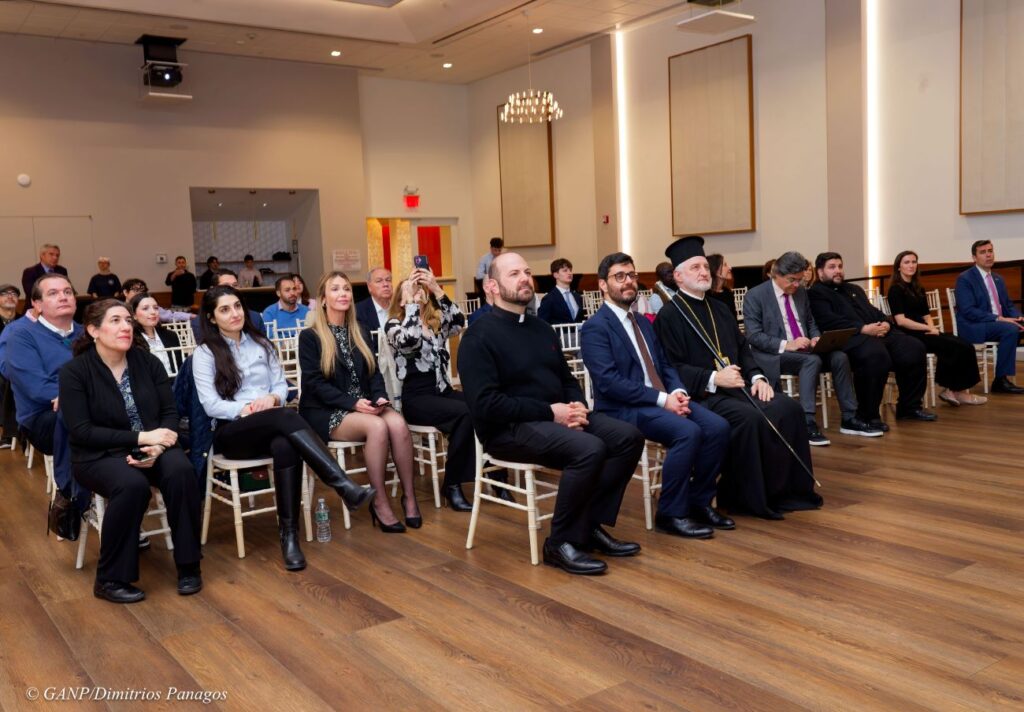
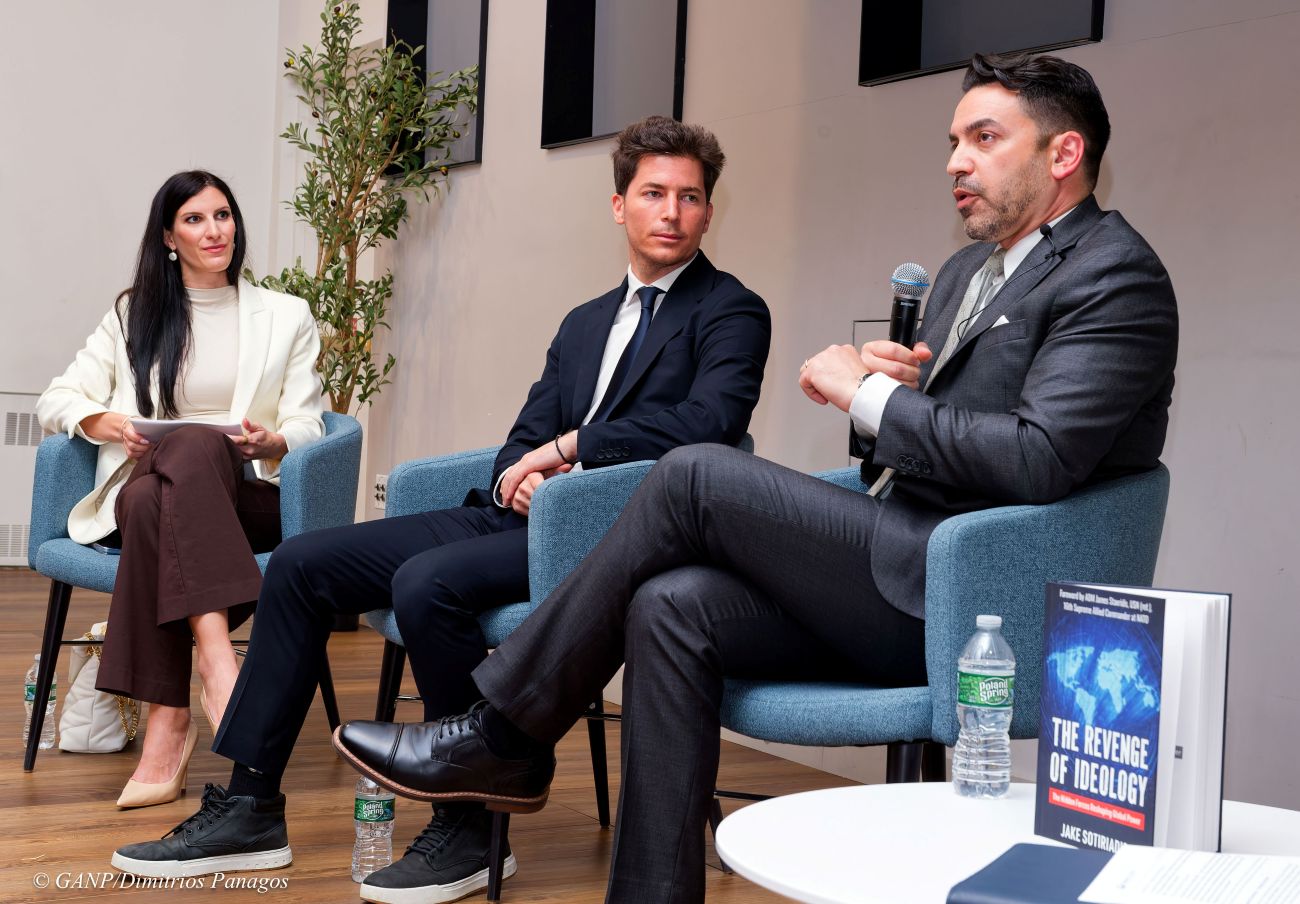
That was the central theme of a book presentation held on April 28 at Chiotes Hall of the Archdiocesan Cathedral of the Holy Trinity in Manhattan, where Sotiriadis presented The Revenge of Ideology: The Hidden Forces Reshaping Global Power before a Greek American audience.
The discussion placed the book in the context of today’s unsettled international landscape, from the challenge posed by authoritarian regimes to the broader question of whether the West underestimated the staying power of ideological conflict after the collapse of the Soviet Union.
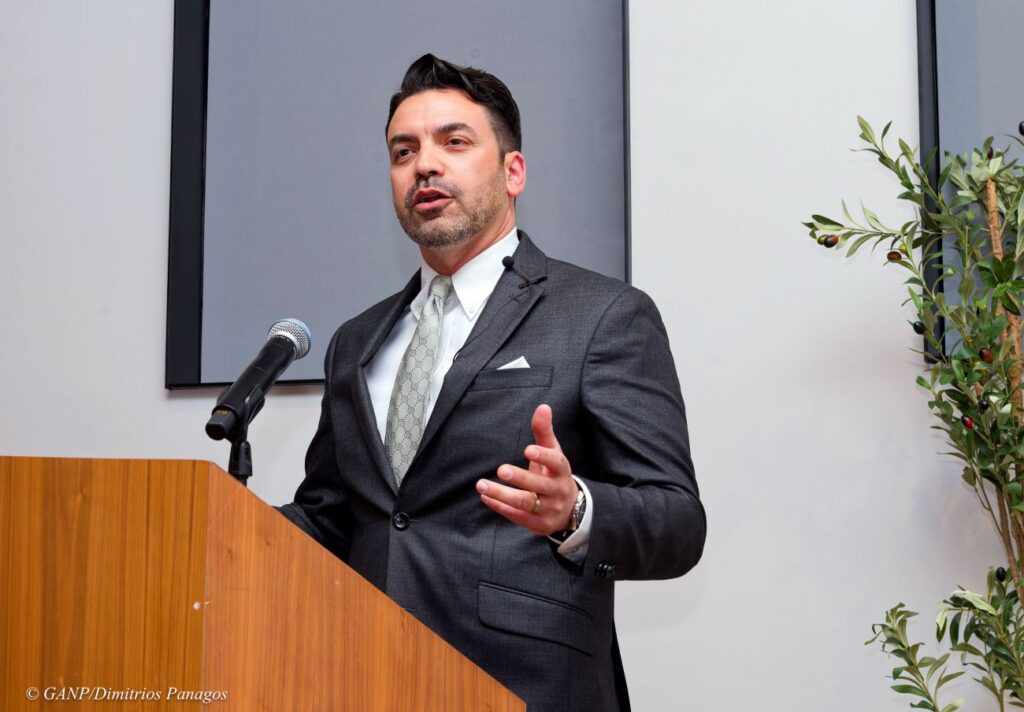
Sotiriadis, a former U.S. Air Force intelligence officer with more than two decades of service, has worked on national security issues in posts that included the National Security Agency, the Pentagon and the U.S. Embassy in Berlin. He is currently affiliated with the Atlantic Council’s Scowcroft Center for Strategy and Security and the Center for Strategic and International Studies, and teaches U.S. diplomats at the Foreign Service Institute.
His book argues that the triumphalism of the 1990s produced a dangerous illusion: that globalization, American primacy and liberal democracy would continue advancing without serious ideological resistance. In Sotiriadis’ reading, the opposite happened. Rival powers and anti- Western movements adapted, reorganized and returned with ideological projects of their own.
The evening was moderated by attorney Peter Moulinos, who also delivered welcoming remarks. The panel included Petros Kasfikis, Washington correspondent for Mega Channel and To Vima, and Georgia Garanzioti, United Nations correspondent for the Athens News Agency.
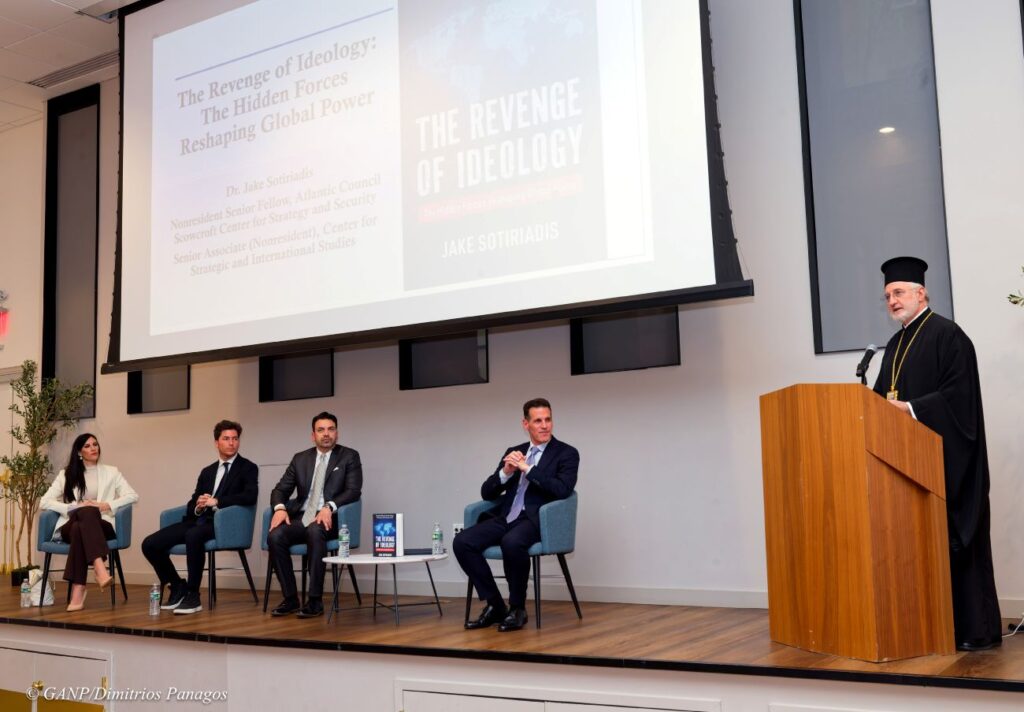
In remarks opening the event, Archbishop Elpidophoros framed the discussion not as a partisan exchange, but as a call for more serious public thinking at a moment of uncertainty and polarization. He stressed the importance of asking difficult questions and seeking a deeper understanding of the forces affecting the world.
Sotiriadis began by revisiting the optimism of the late Clinton era, when the United States appeared unrivaled and the prevailing mood in Washington assumed that prosperity, technological change and American leadership would define the future. That expectation, he suggested, now looks strikingly removed from the world of wars, strategic competition and ideological confrontation that followed.
He pointed in particular to the idea, associated with Francis Fukuyama’s “end of history” thesis, that the defeat of Soviet communism marked the final victory of liberal democracy as the world’s dominant political model. For Sotiriadis, the decades since have shown that ideology did not vanish. It changed form and returned through authoritarian nationalism, religious extremism, anti Western revisionism and new forms of geopolitical competition.
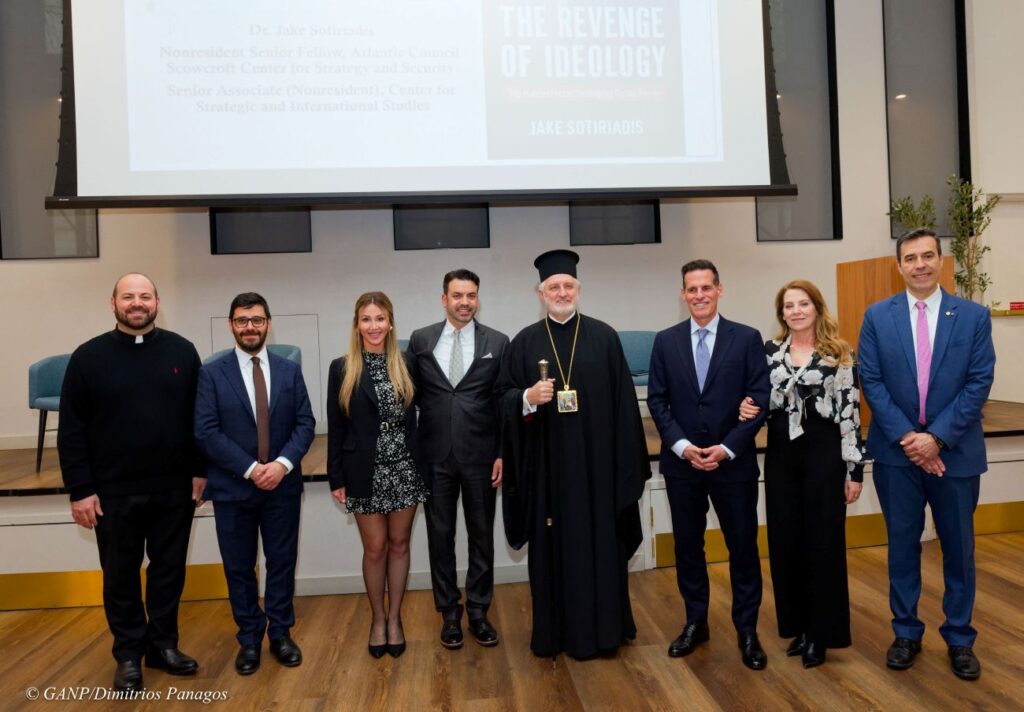
The book includes a foreword by retired Admiral James Stavridis, the Greek American former NATO Supreme Allied Commander Europe. Sotiriadis has also used the book’s analytical framework in recent television appearances and public commentary on international crises, including the U.S. Iran confrontation.
For a Greek American audience, the subject carried an additional relevance. Many of the ideological struggles discussed in the book are not abstract. They intersect with questions of religious influence, Russian power, Turkey’s regional role, the Eastern Mediterranean and the place of Hellenism and Orthodoxy in a changing international system.
The event underscored how debates once confined to foreign policy circles are increasingly entering community spaces, churches and civic forums. The question raised by Sotiriadis’ book is not simply whether the world has become more chaotic. It is whether the West misunderstood the nature of the forces arrayed against it, and whether it still has the intellectual confidence to answer them.