NEW YORK, NY – [Photos: Parade Committee / EMBCA]
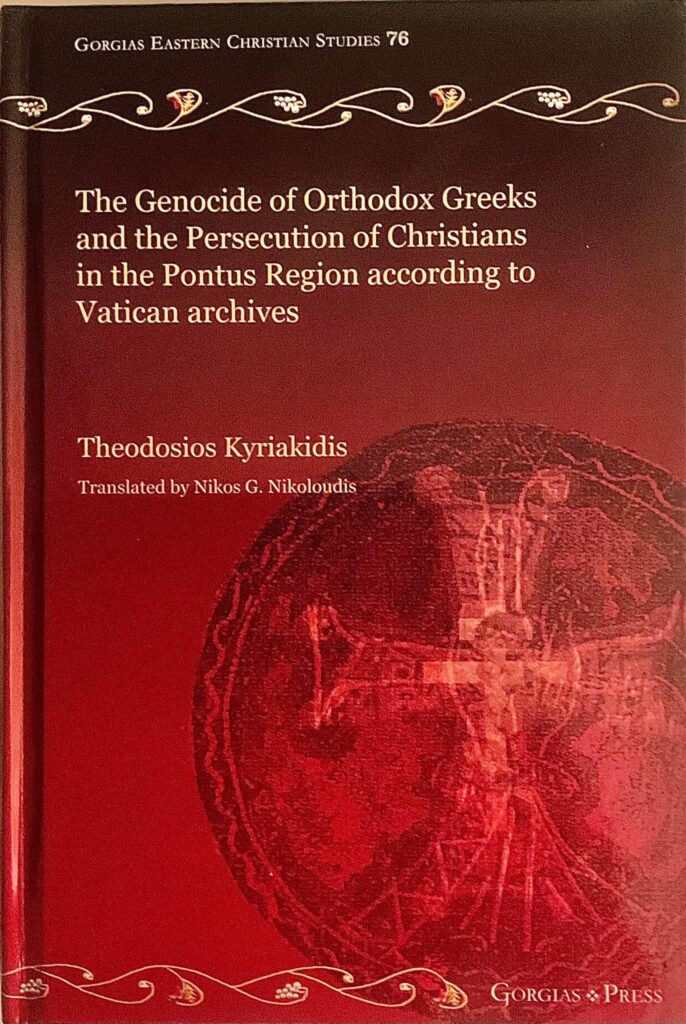
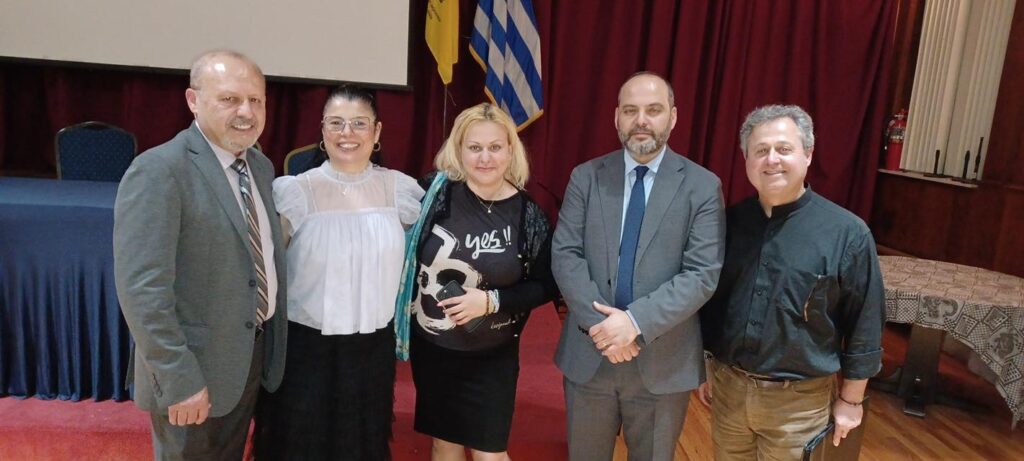
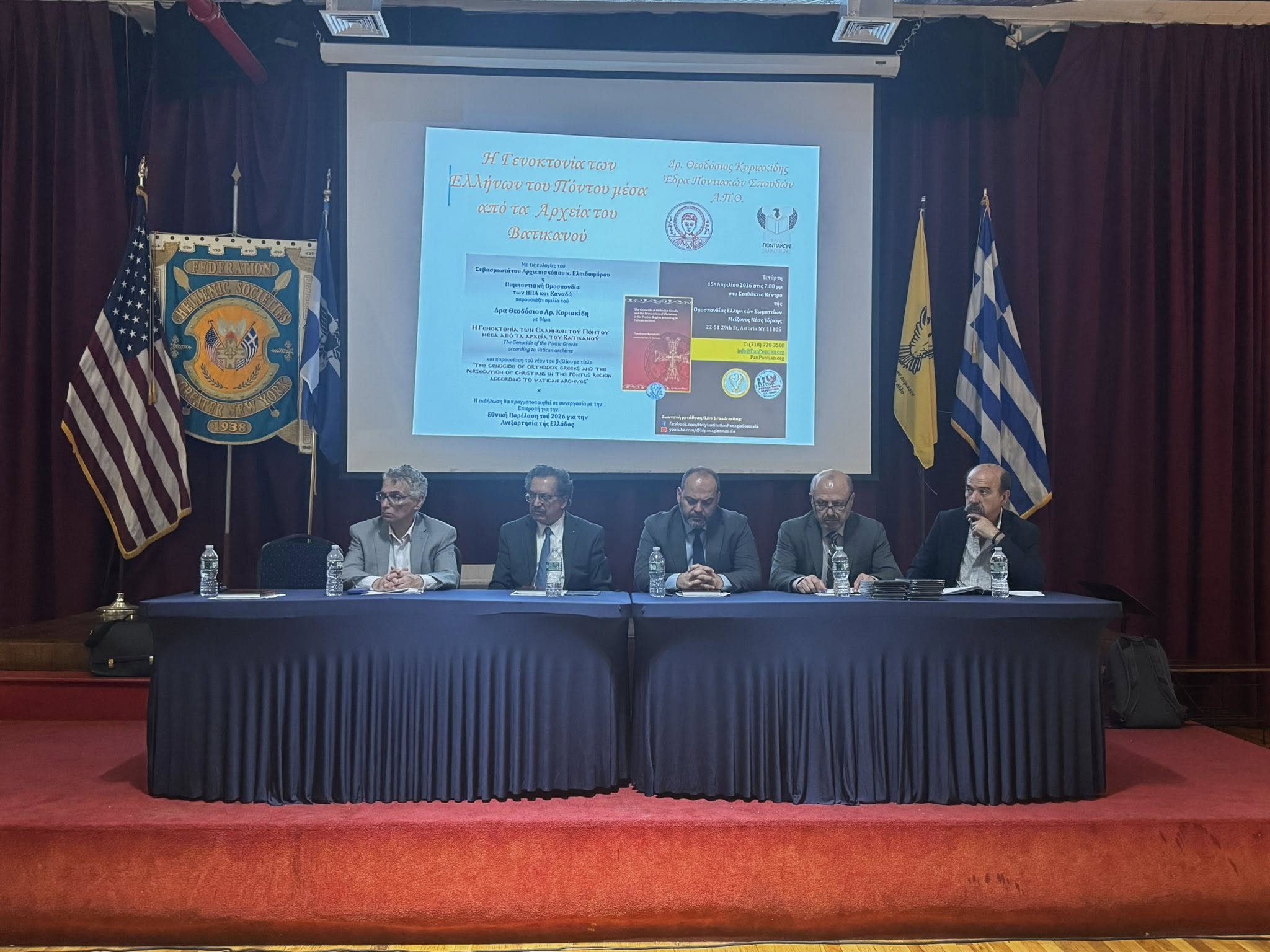
An important and thought-provoking panel discussion titled “The Genocide of the Pontic Greeks According to Vatican Archives” was held on the evening of April 15 at the Stathakion Cultural Center, bringing together scholars, community leaders, and engaged members of the public for a timely examination of historical memory and accountability.
The event focused on the systematic destruction of Christian populations during the late Ottoman period (1913–1923), including the experiences of Pontic Greeks, Asia Minor Greeks, and Armenians. Drawing on rare archival material preserved by the Roman Catholic Church, the discussion highlighted eyewitness reports from Catholic missionaries who documented persecution, deportations, and mass atrocities across the Ottoman Empire.
The panel featured distinguished speakers whose work intersects history, scholarship, and public leadership:
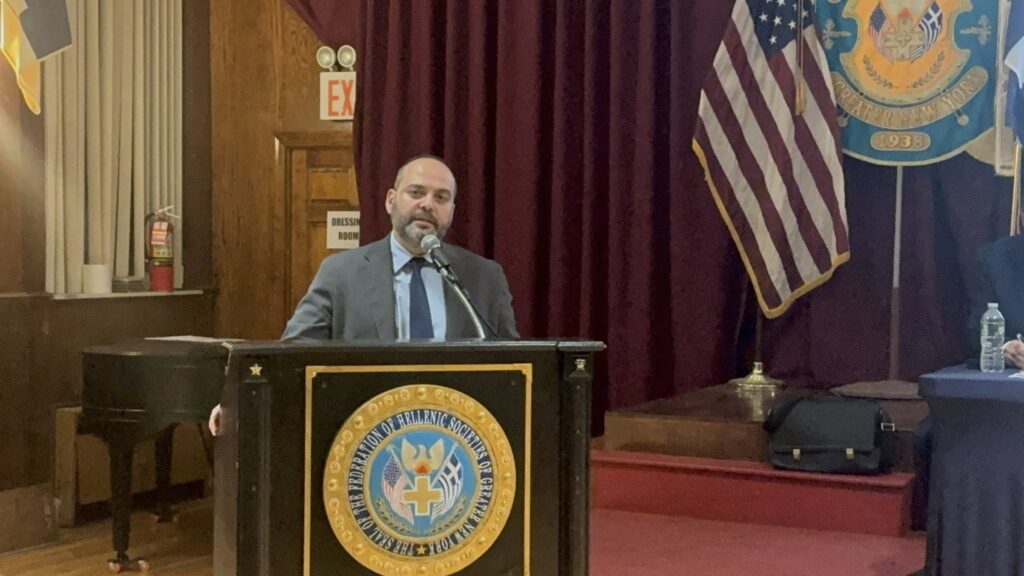
Dr. Theodosios Ar. Kyriakidis, historian and author, presented his groundbreaking research based on Vatican archival sources, offering critical insight into the mechanisms and documentation of the Pontic Greek Genocide.
Louis Katsos, Chairman of the 2026 Greek Independence Day Parade in New York and President of the East Mediterranean Business Culture Alliance (EMBCA), spoke on the importance of connecting historical truth with contemporary global dialogue and public awareness.
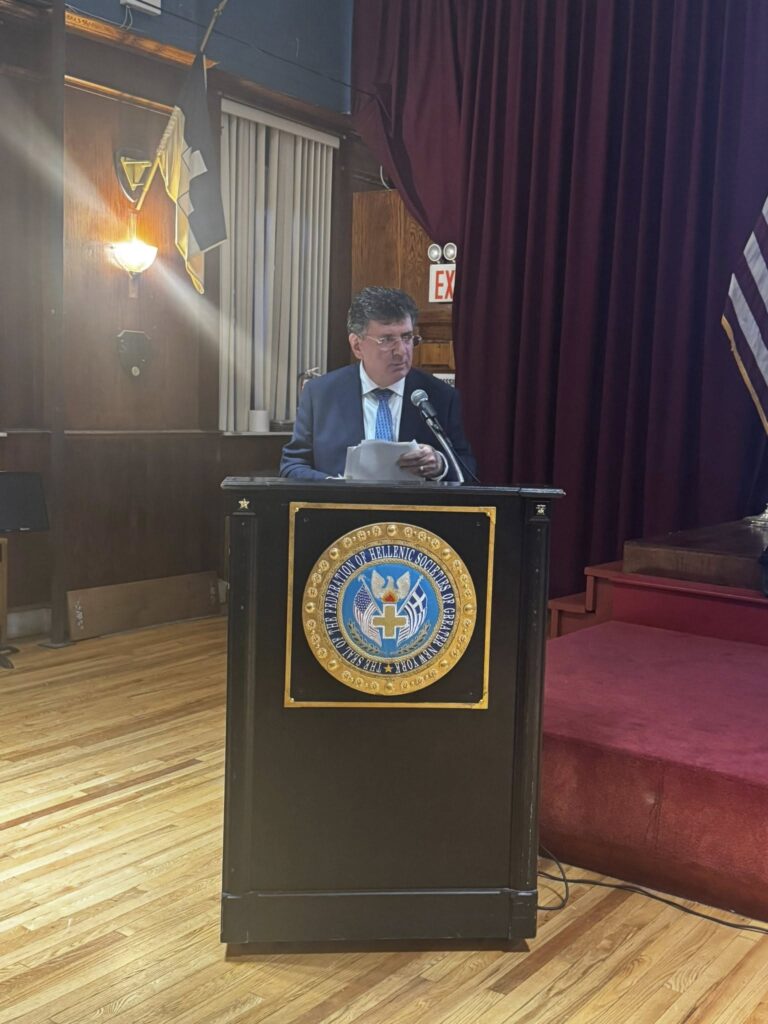
Dr. Haralambos V. Vasiliadis, an expert in engineering and systems analysis, provided a multidisciplinary perspective, examining the genocides as structured and systematic processes, emphasizing the importance of understanding such events to prevent future atrocities.
The discussion underscored the significance of Vatican archival evidence as some of the most compelling independent documentation of these historical events. It also reinforced the importance of continued scholarly research, public engagement, and international recognition.
Additional scholarly context was provided through the work of Dr. Nikos G. Nikoloudis, whose English translation of Dr. Kyriakidis’ research has helped bring these findings to a broader global audience.
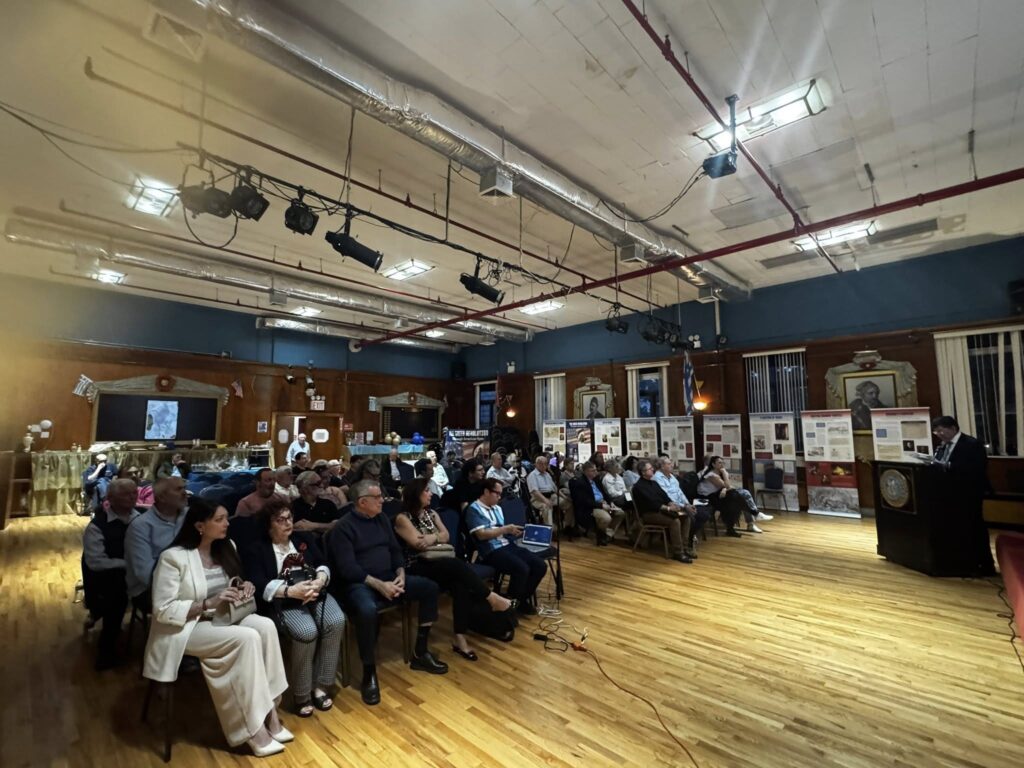
Organized within the broader framework of EMBCA’s programming, the panel highlighted the ongoing relevance of these historical events in today’s geopolitical and cultural discourse. By bringing together academic research, public leadership, and analytical perspectives, the event emphasized a shared commitment to truth, remembrance, and accountability.
This panel is part of a continuing effort to preserve historical memory, foster informed dialogue, and promote awareness of the Hellenic and broader Christian Genocides. It reflects a unified approach grounded in scholarship, leadership, and global context.